
10 Games So Incredible You’ll Overlook Their Awful Combat
From STALKER to This War of Mine, these games are so good you'll forgive their torturous combat—flawed masterpieces worth every frustration.
I’ve been playing video games for over two decades, and if there’s one thing I’ve learned, it’s that no game is perfect. Some excel at storytelling, others at world-building, and a rare few manage to nail almost everything—except the combat. I’m talking about those frustratingly brilliant titles where you find yourself suffering through clunky fights just because the rest of the experience is so intoxicating. As we settle into 2026, with developers pushing boundaries more than ever, it’s a good time to revisit the classics that made me want to throw my controller while simultaneously declaring them masterpieces. Here are ten games that are so good, you’ll forgive their torturous combat.
10. STALKER: Shadow of Chernobyl
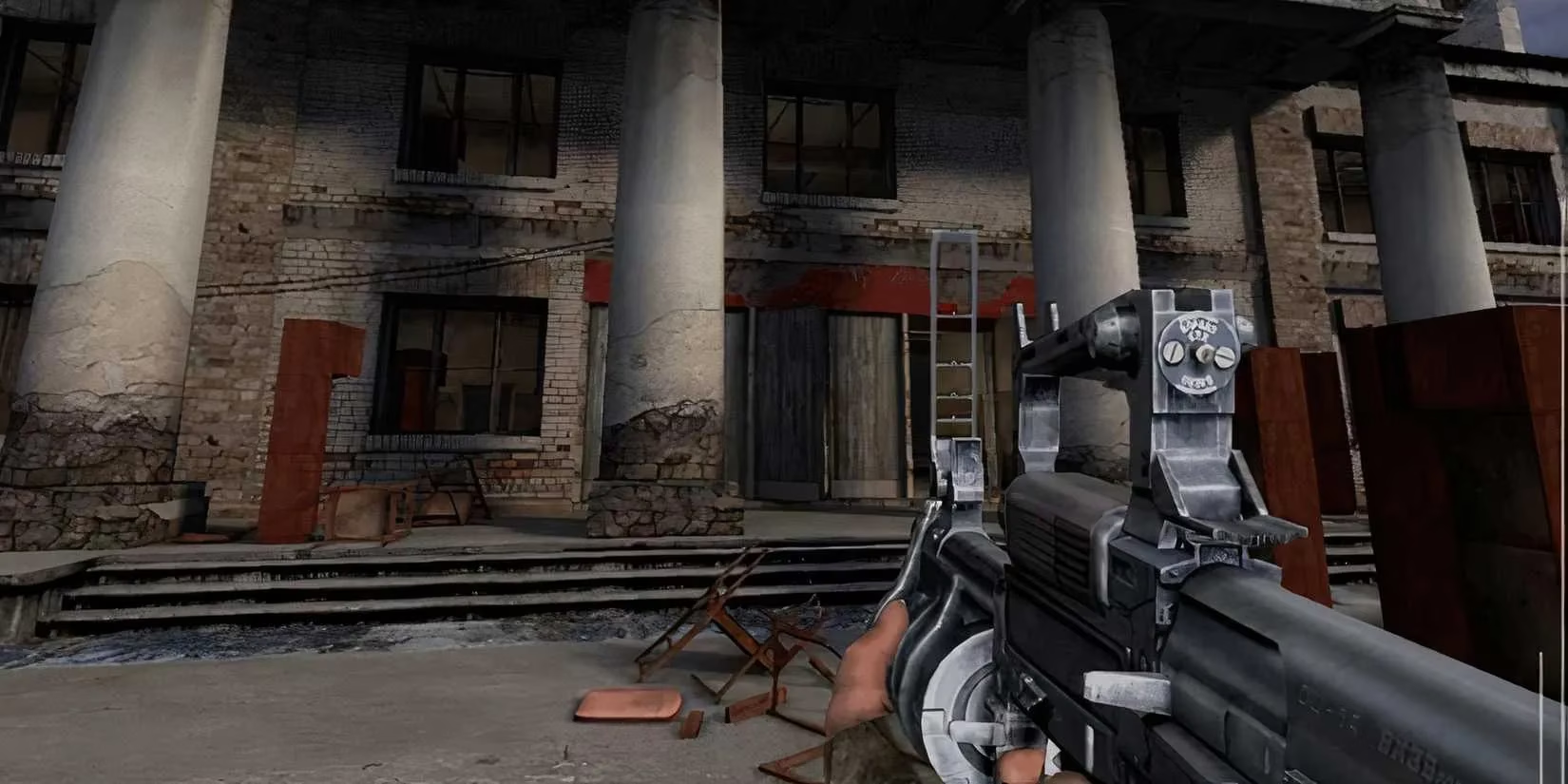
I still remember booting up STALKER: Shadow of Chernobyl for the first time back in 2007. The Zone sucked me in with its oppressive atmosphere, desperate scavengers, and the constant hum of radiation. GSC Game World built a survival sandbox that felt alive, and even today—while we eagerly await further expansions to the franchise—it remains a benchmark for immersive world design.
But oh, the combat. It’s a bullet-spongey nightmare. Enemies don’t react to getting shot so much as they absorb lead like supernatural sponges. Armorless bandits will shrug off multiple rifle rounds, and later on, the armored Monolith troops turn every firefight into a protracted test of patience. Ammunition is scarce and expensive, and the encumbrance system punishes you if you dare to carry enough firepower. I’d often find myself frozen in place, overburdened, while a single enemy casually advanced with a third of his health still intact. Thankfully, GSC realized the absurdity and refined the gunplay dramatically in Clear Sky and Call of Pripyat. The newer sequel, released a couple of years ago, learned from these mistakes, but the original’s combat remains a special kind of pain that I tolerate just to soak in its unmatched ambiance.
9. This War of Mine
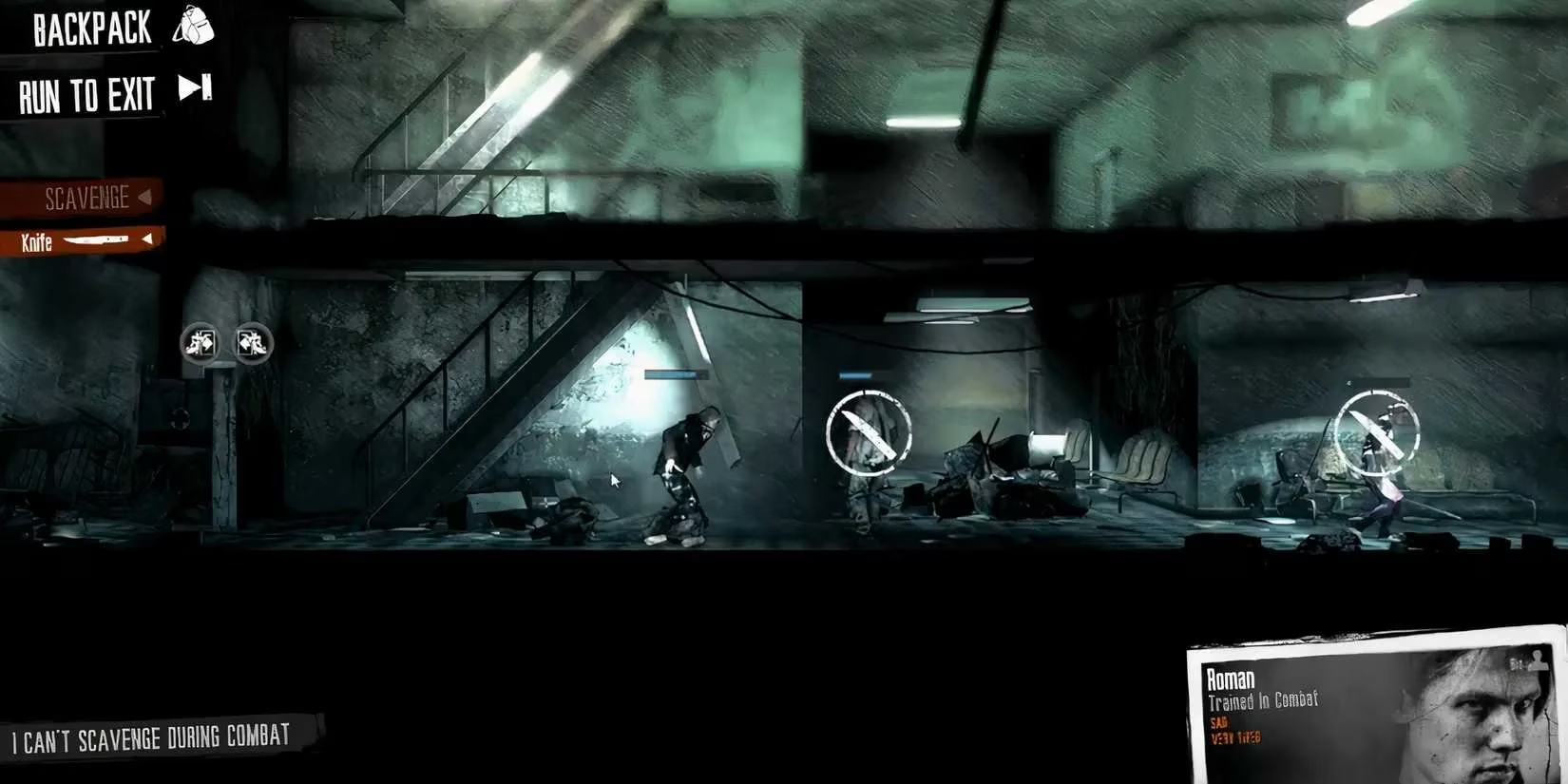
11 bit studios’ This War of Mine is a soul-crushing masterpiece that teaches you the horrors of civilian life during a siege. I’ve spent countless nights sneaking through bombed-out buildings, managing hunger, and wrestling with moral dilemmas. The game constantly warns you that combat should be a last resort—and it means it.
The fighting itself is an awkward click-fest. To attack, you click on the enemy. To shoot, you click on the enemy. Miss the tiny icon by a pixel? Your character waddles over to loot a cabinet while the hostile unloads a shotgun into your back. The AI’s tactical depth extends to chaotically sprinting up and down staircases while yelling profanities. What’s worse, if you anger an armed NPC, their entire faction remembers your face, and that grudge magically extends to your other survivors, even though there’s no logical reason for them to know you’re allies. It’s infuriating, but the emotional weight and the strategic scavenging loop are so compelling that I keep coming back despite the combat.
8. RuneScape
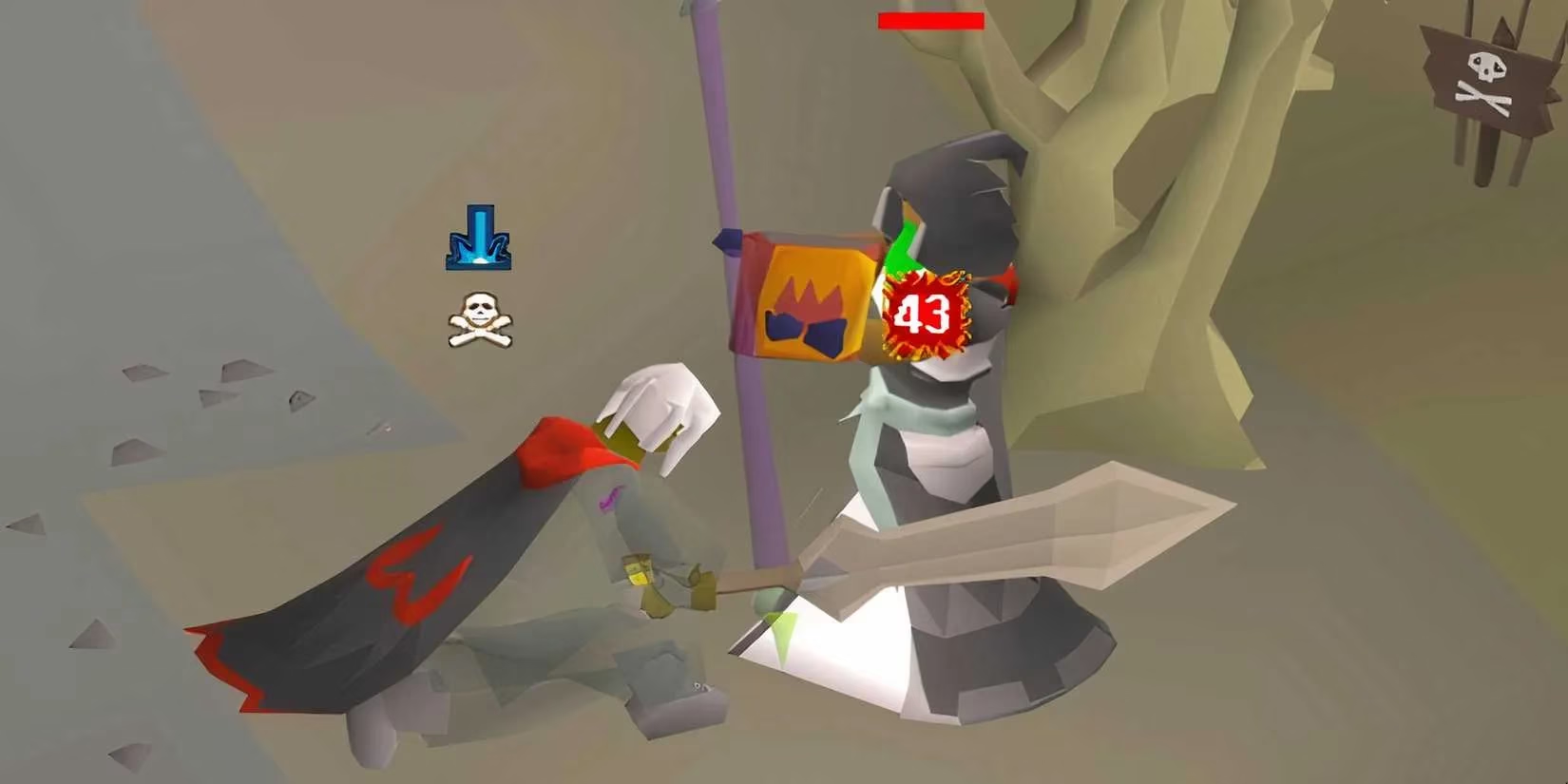
RuneScape—whether Old School or modern—has defined my social gaming life. The quests, the skilling, the quirky community; it’s a world I adore. But I have to admit: player-vs-player combat looks utterly ridiculous. Two adventurers in mismatched armor stand rigidly in front of each other, taking turns exchanging head-smacks like a drunk pub brawl in slow motion.
The tactical depth revolves around right-clicking your opponent and occasionally hitting the eat button to survive a few more slaps. The entire PVP experience is essentially a stat-check with fashion. Yet the journey to acquire that coveted armor set is so engaging—filled with grinding, trading, and dungeon runs with friends—that by the time you’re defeated in the Wilderness, you barely care. You’ve already made memories, and you’re ready to do it all over again. The combat might be silly, but the world of Gielinor remains an unforgettable home.
7. XCOM 2
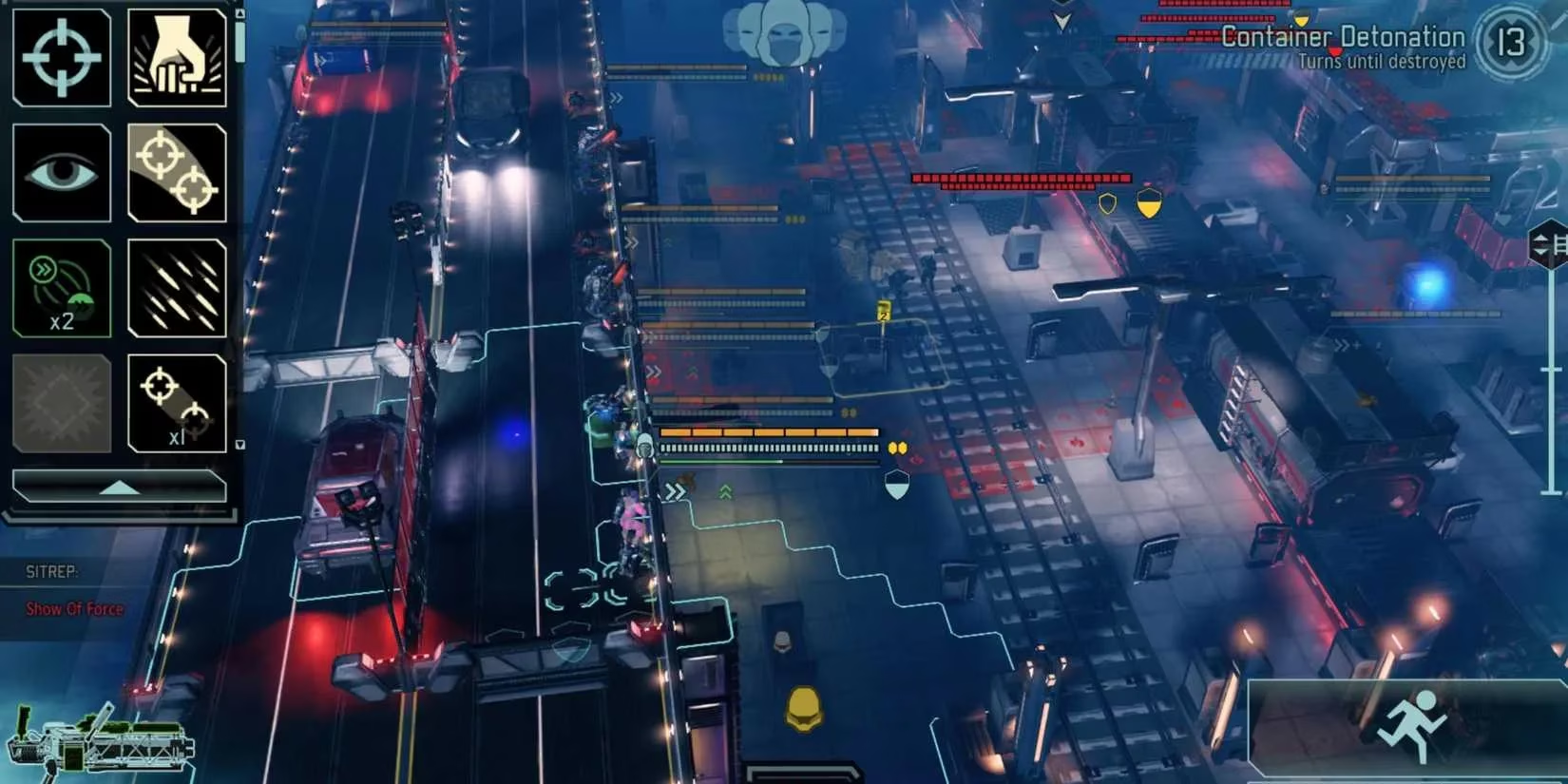
Firaxis Games’ XCOM 2 is a tactical triumph—except when its random number generator decides to ruin your day. I lead a scrappy resistance against alien overlords, carefully positioning my troops, utilizing cover, and planning flanking maneuvers. The tension is electric until my best soldier, standing three meters from a Sectoid with a 98% hit chance, somehow misses and shoots the ceiling instead.
The RNG in XCOM 2 doesn’t just add unpredictability; it feels deliberately cruel. Losing a veteran operative to a statistically unlikely misfire can unravel an entire campaign, and with the game’s punishing difficulty, there’s little room for recovery. I’ve screamed at my monitor more times than I can count, but I still sink hundreds of hours into it because the strategic layer, the base-building, and the emergent narratives are simply unmatched. Even in 2026, mods continue to keep the game alive, but that infuriating combat dice roll will forever haunt me.
6. Ghost Recon Wildlands
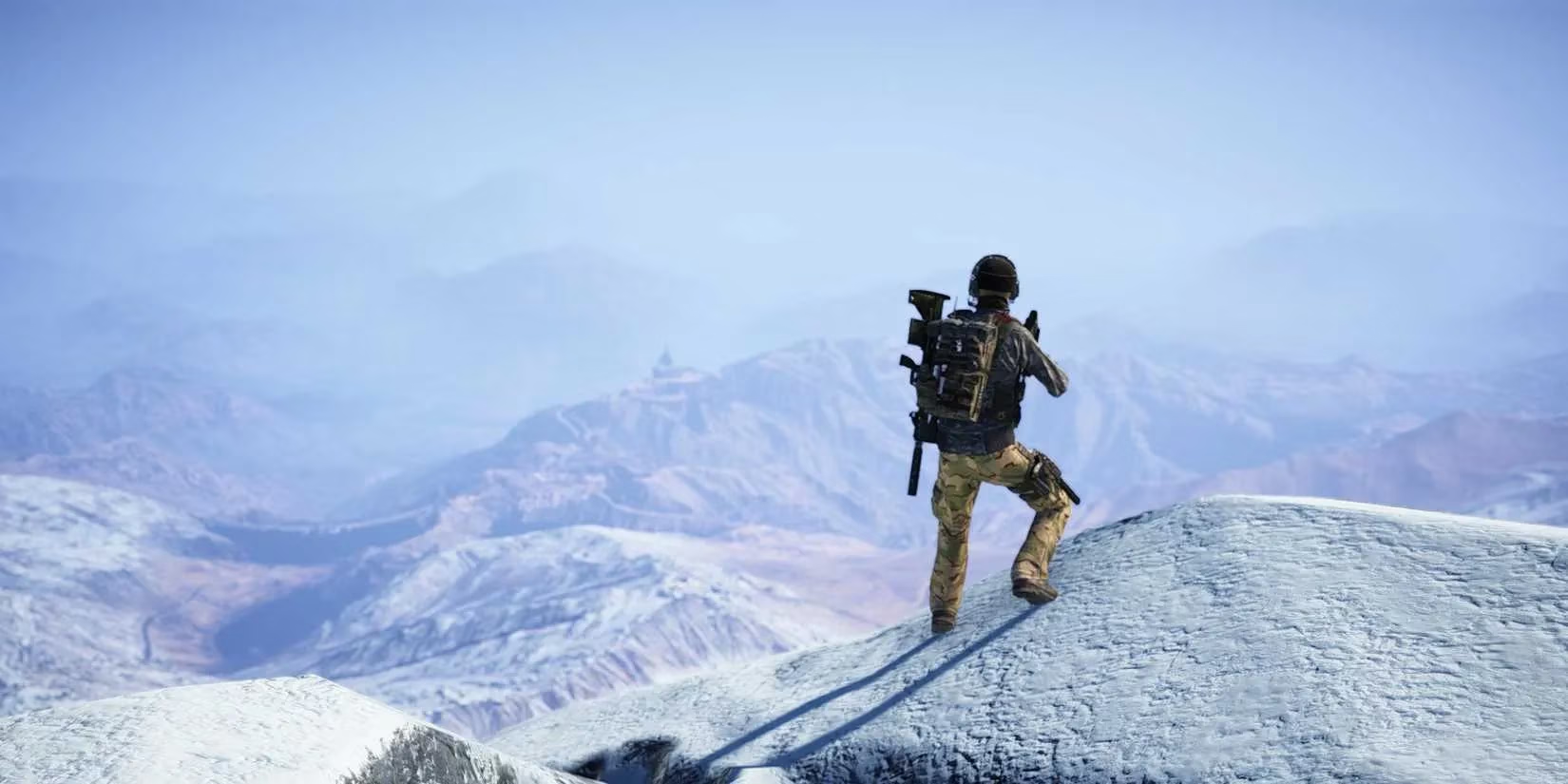
Ubisoft took a wild swing with Ghost Recon Wildlands in 2017, crafting a narco-themed open-world playground where I command a squad of elite operators. The game shines during stealth sequences—coordinated sync shots, drone recon, slow methodical infiltrations. The narrative about the Santa Blanca cartel and its ruthless leaders is surprisingly gripping, and the massive map of Bolivia feels alive with culture and danger.
Then the gunfight begins, and everything falls apart. Far too many missions devolve into bullet-hell scenarios where I’m funneled into cramped arenas against waves of enemies. The gunplay lacks punch, making automatic weapons feel like peashooters. It’s a shame, because the sequel Breakpoint fixed the combat beautifully, but it forgot to include a story worth caring about. Wildlands remains a game I recommend to anyone looking for a tactical narrative experience—just be prepared to endure some painfully dull firefights.
5. Medal of Honor (2010)
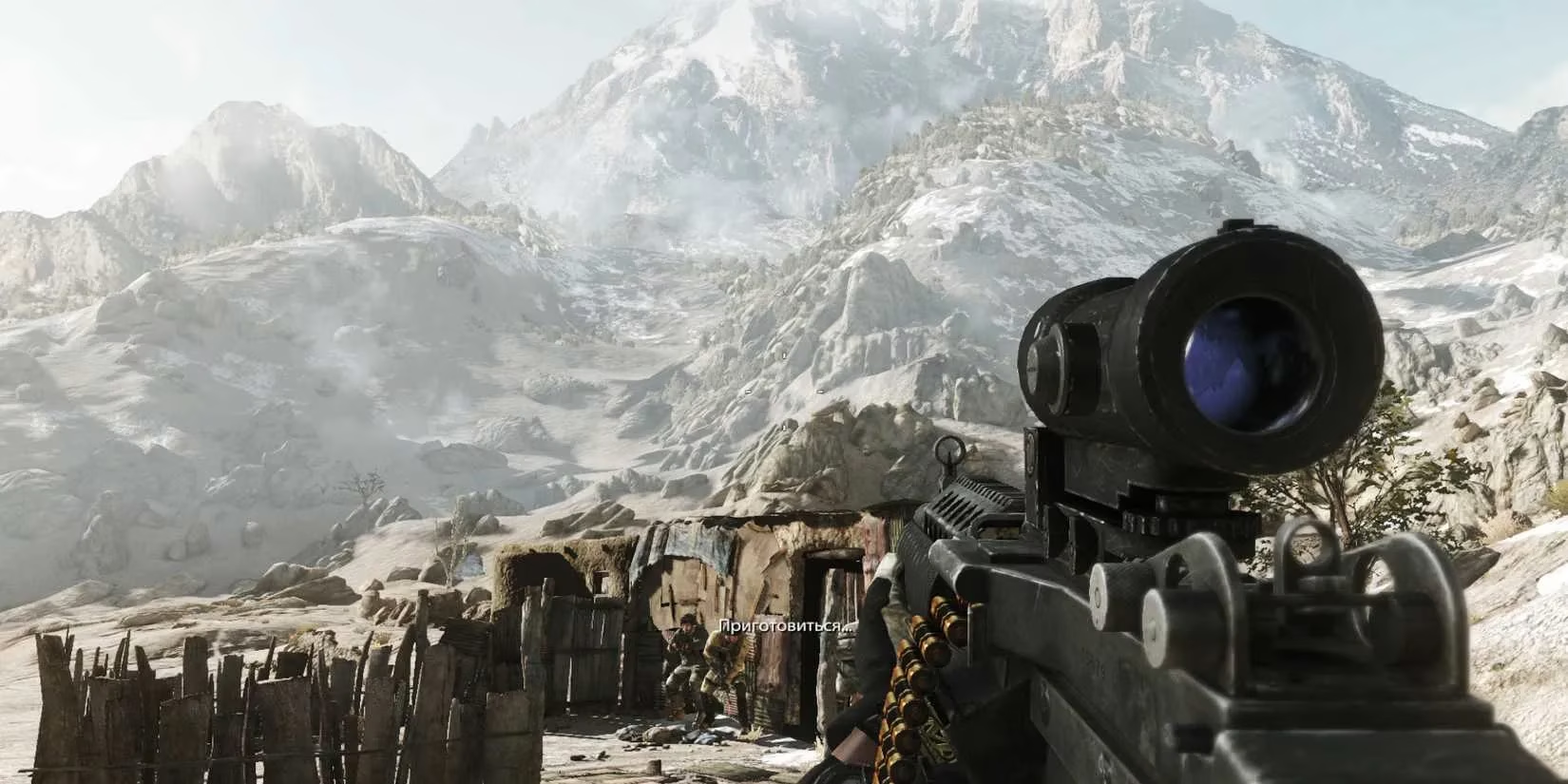
The 2010 Medal of Honor reboot is one of the most underrated shooters I’ve ever played. Danger Close Games crafted a cinematic love letter to modern warfare, focusing on a Tier 1 operator in Afghanistan. The attention to detail is breathtaking—the ACOG scope has a visible anti-glare outline, the radio chatter feels authentic, and the missions immerse you in a gritty, believable struggle. I felt like a real special forces soldier, not a Hollywood caricature.
And yet, the gunplay is strangely hollow. Weapons have no weight, no recoil kick; engaging enemies feels closer to playing airsoft than engaging in a firefight. It’s a testament to the storytelling that I barely noticed during my first playthrough. Even now, with remasters and remakes flooding the market, this Medal of Honor stands out as a masterpiece of tone and presentation that just needed a bit more punch in its boomsticks.
4. Hearts of Iron III
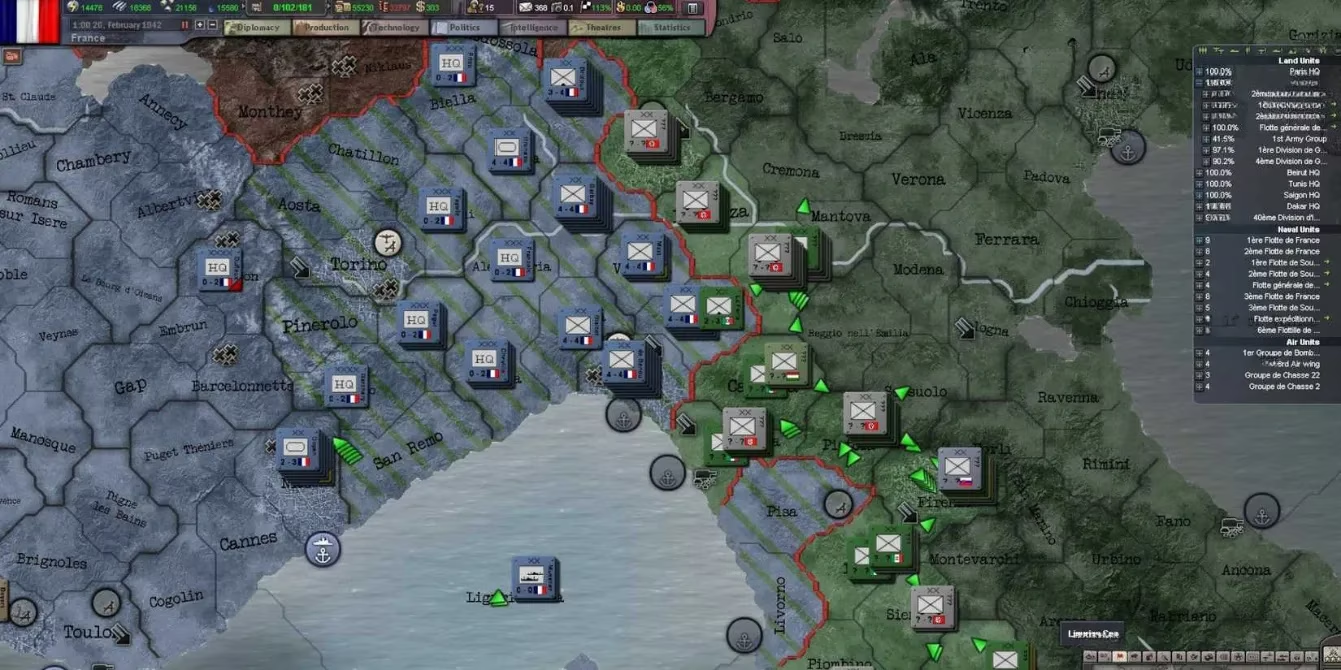
Paradox Interactive’s Hearts of Iron III is the pinnacle of bureaucratic grand strategy. I can tweak political appointments, adjust economic policies, and manage production lines down to individual factories. It’s an autistic’s dream—and I mean that with the utmost respect. But when war breaks out, I’m greeted with a combat system that makes tic-tac-toe look sophisticated.
Wars are won almost entirely by the industrial output: whoever produces more divisions wins every engagement. There’s no room for tactical genius—no fighting retreats, no envelopment maneuvers that feel player-driven. The outcome feels predetermined the moment the factories start humming. The saving grace is that the nation-management aspect is so deep I barely have time to worry about the frontlines, because my cabinet is plotting a coup and the economy is collapsing. I still play it today for the sheer complexity, but I’ve made peace with the fact that the fighting is just a numbers game.
3. Fortnite
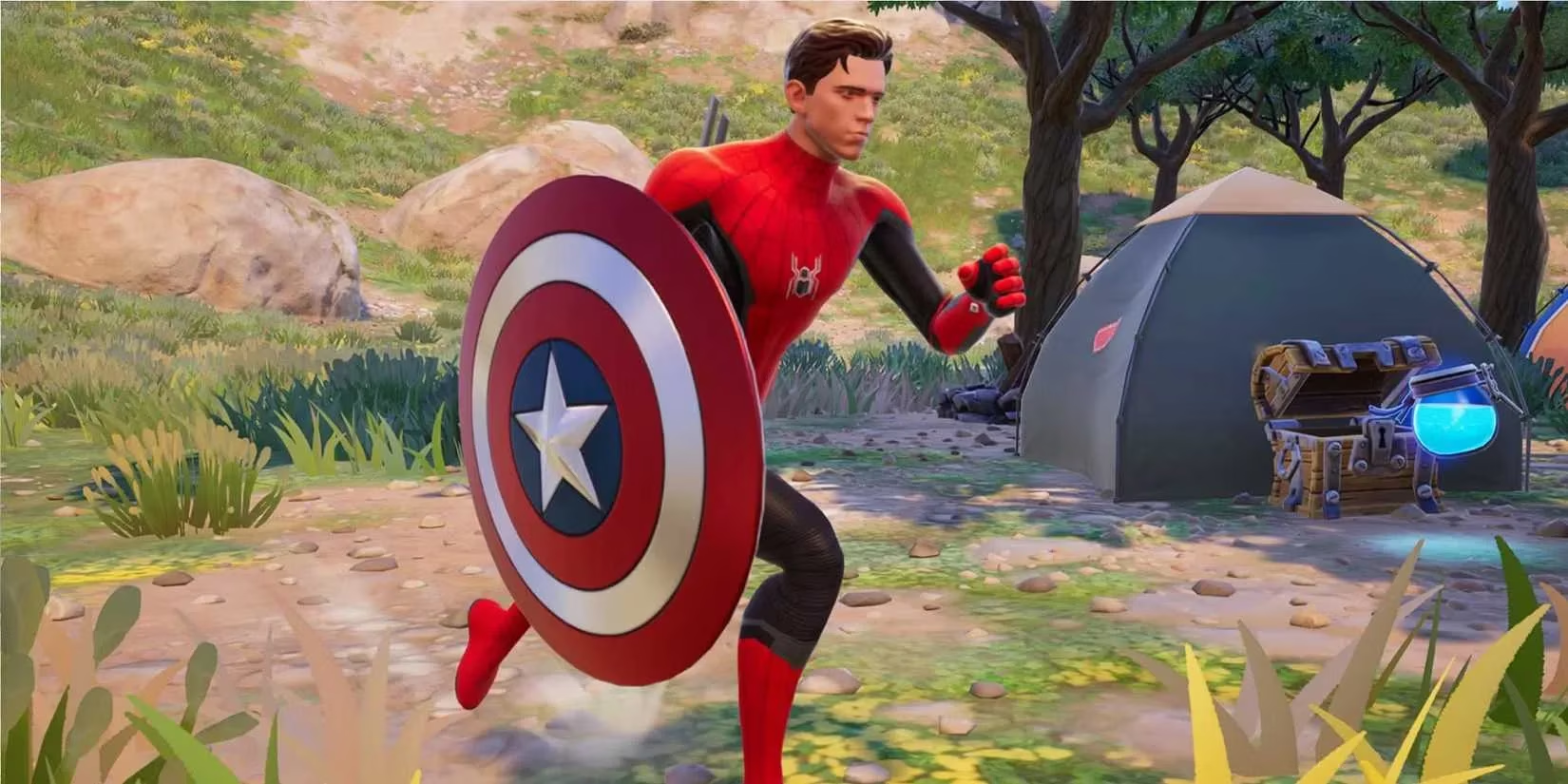
Fortnite remains a cultural juggernaut in 2026, and its core gunplay is genuinely fun—building, editing, and shooting combine into a high-skill ballet. However, the developers’ obsession with crossover sponsorship deals consistently ruins the late-game experience. I’ve lost count of the times I’ve been dominating a match, outbuilding opponents, landing sniper shots, only to be utterly obliterated by a Kamehameha wave, a lightsaber that blocks all bullets, or a Marvel superhero item with stats tuned to godhood.
These collaborations keep the game fresh and hilarious, but the balance is always a mess for the first few weeks of a season. Victory often hinges on who finds the meta-defining mythic weapon first rather than actual skill. I still drop into the island with friends because the chaos is unmatched, but I’ve learned to accept that some deaths will be sponsored by Disney.
2. Digimon World: Next Order
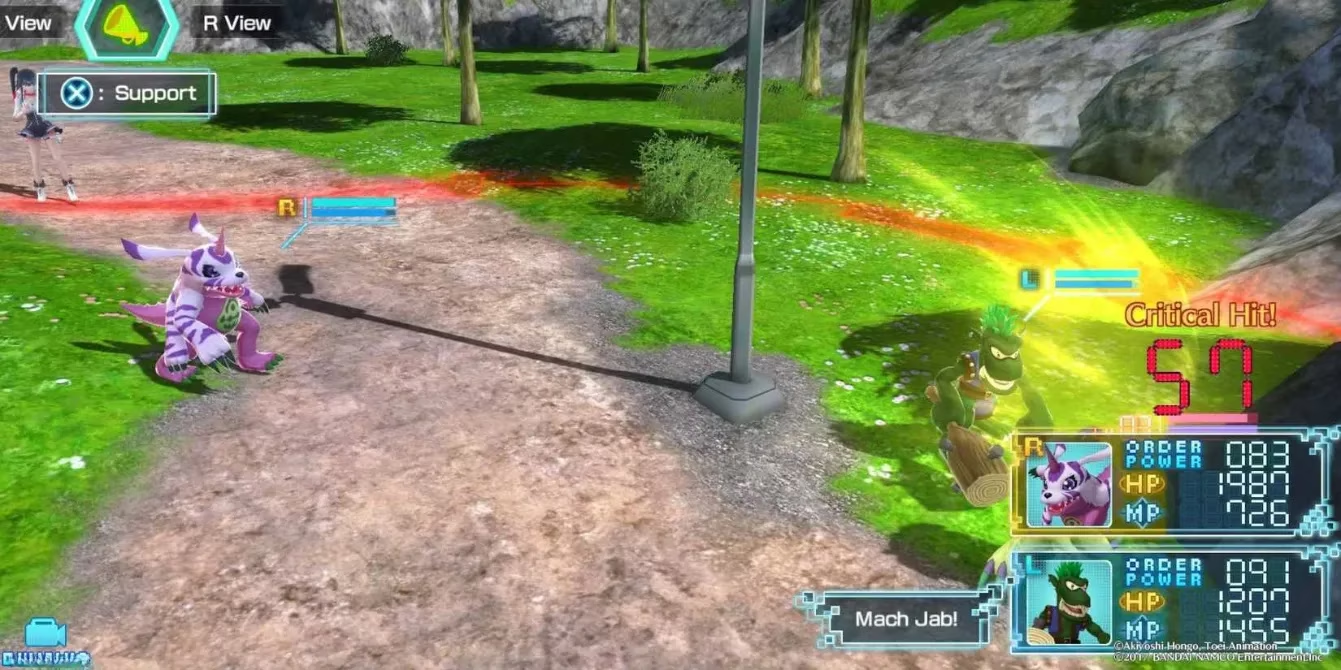
I’ve always loved the Digimon franchise for its darker narratives and the bond between partner and Digimon. Next Order , originally a Vita title and now available everywhere, offers two Digimon partners and a heartfelt story. But the combat system feels like fighting through the Windows Start Menu.
Instead of traditional turn-based battles, the game opted for live combat—except every action requires multiple button presses and menu navigation. Ordering an attack means scrolling, confirming, then waiting for a cool down, all while enemies freely beat on your creatures. The difficulty spikes towards the end are absurd, and to make matters worse, your Digimon eventually die and revert to eggs, forcing you to grind all over again. It’s a heartbreaking loop, yet the narrative and the bond system are so compelling that I endure the menu hell just to see the story through.
1. Kingdom Hearts Re:Chain of Memories
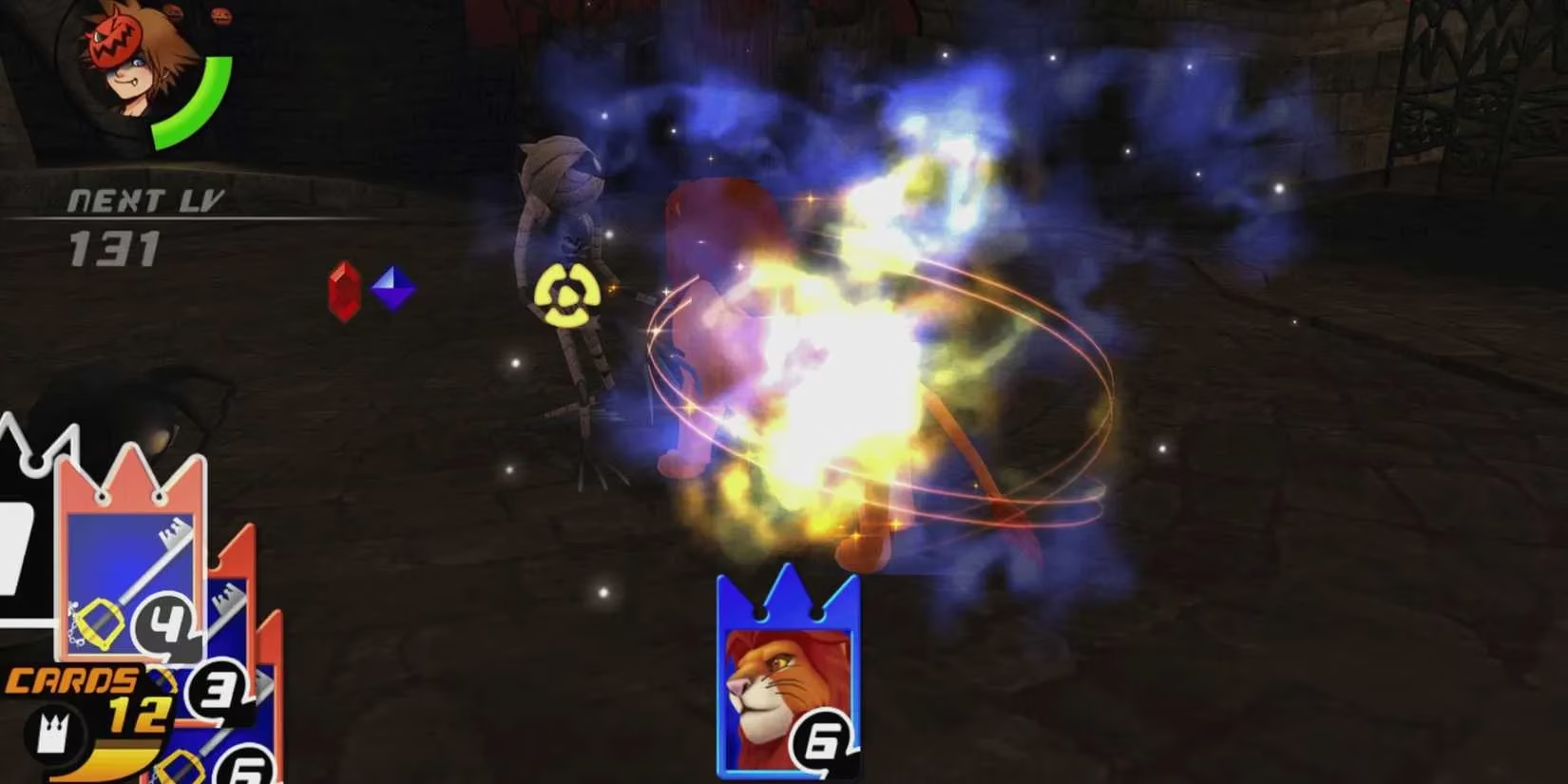
Kingdom Hearts: Chain of Memories on the Game Boy Advance was a clever adaptation, but its PlayStation 2 remake, Re:Chain of Memories , is a glorious disaster. Square Enix kept the card-based combat—where you shuffle decks to attack—but set it in fully 3D environments with the same movement as Kingdom Hearts II . I spend half my boss fights trying to dodge and the other half fumbling through my card deck for a decent combo while Organization XIII members unleash cinematic onslaughts.
The bosses have multilayered health bars and brutal attack patterns, and the card system transforms every confrontation into a frantic, awkward mess. Yet, I consider it arguably the best story in the entire series. It bridges KH1 and KH2 seamlessly, giving crucial development to a cast of mysterious villains that remain fan favorites even in the modern saga. In 2026, with the Kingdom Hearts storyline wrapping up in unexpected ways, I find myself revisiting Re:Chain of Memories for its narrative brilliance—and cursing its combat every step of the way.