
Fortnite OG’s Permanent Return Is Still Dominating in 2026
Fortnite OG’s permanent nostalgia mode reshapes live-service history, two years on.
I still vividly remember December 6, 2024, when Epic Games turned a wildly successful limited-time event into a forever home for nostalgia. As someone who dropped into the battle bus back in 2017, the news that Fortnite OG would become a permanent fixture hit me like a wave of deja vu mixed with pure joy. Now, two years into its permanent run, the mode isn’t just surviving—it’s reshaping how we think about live-service games and their histories.
Before diving into where we are now, let’s rewind to that landmark announcement. Fortnite OG originally launched as a temporary trip down memory lane, bringing back the original Chapter 1, Season 1 map, loot pool, and mechanics. The response was nothing short of monumental. On its single biggest day, 44.7 million players logged in, shattering the record previously set by in-game concerts. As Epic explained back then, it was an invitation to “explore the OG map, collect OG loot, and relive OG seasons.” I watched my friends list light up with names I hadn’t seen in years—everyone wanted one more chance to land at Tilted Towers or rumble through Loot Lake with the old-school pump shotgun.
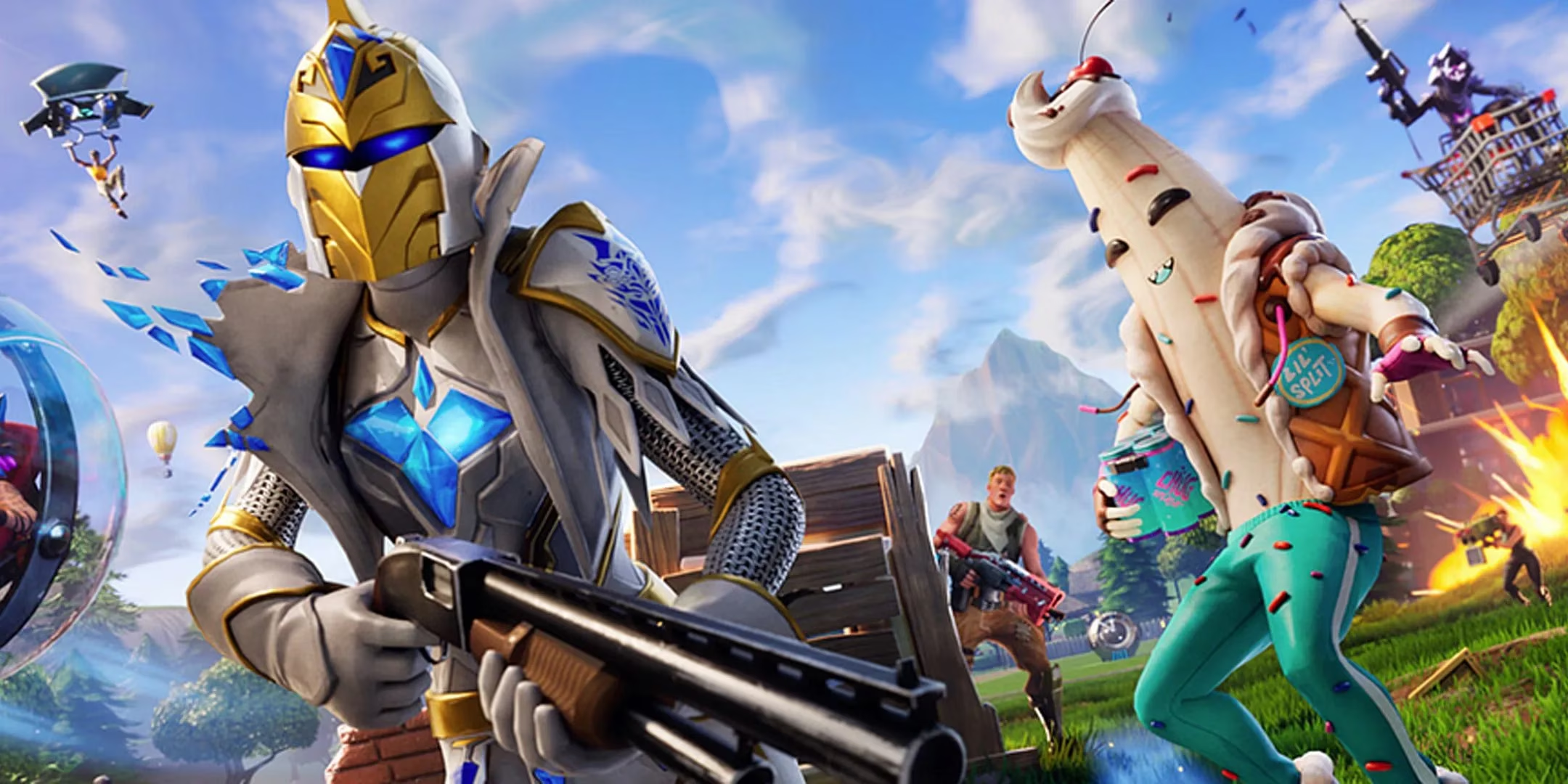
What made the permanent transition so fascinating wasn’t just the numbers—it was the timing. That same day, Blizzard launched Overwatch: Classic, its own nostalgic mode dipping into the 2016 launch state for a limited period. The contrast couldn’t have been starker. Fortnite OG blew past all expectations and cemented itself as a core experience, while Overwatch’s experiment was, by design, temporary. It got me thinking: could Blizzard resist making it permanent too? As I write this in 2026, Overwatch: Classic has indeed made a few comebacks as seasonal events, but it never achieved the persistent, evolving legacy that Fortnite OG has. Why did one game manage to bottle lightning while the other merely teased it? The answer, I believe, lies in how Fortnite OG grew beyond its initial pitch.
Fast forward to today. The permanent Fortnite OG mode isn’t just a frozen-in-amber portrait of 2017. Epic has iterated on the concept, introducing “OG Seasons” that cycle through the most beloved periods from the game’s first decade. Currently, we’re reliving Chapter 1, Season 6, with the spooky Floating Island, shadow stones, and those delightfully janky Quad Launchers. Next month, leaks suggest a shift to Chapter 2—something I didn’t think I’d see outside of private servers. This rotation keeps the experience fresh while preserving the magic of rediscovery. The player counts? They remain staggering. While not always hitting that 44.7 million peak, a typical Saturday afternoon still sees queues pop instantly, and the mode consistently ranks alongside the main Battle Royale in popularity charts.
Why does it work so well in 2026? For me, it’s not just about nostalgia. Fortnite OG has become a living museum, a place where veteran players can prove they still have the old instincts, and newer players can finally understand the memes about double pumping. It also serves as a brilliant on-ramp for anyone intimidated by the complexity of modern Fortnite, with its gold bars, NPCs, and weapon modding. In OG, the simplicity is the feature. Land, loot, shoot, build a simple ramp—and you’re already having fun. I’ve introduced countless friends to the game this way, and they always say the same thing: “I get why you were obsessed.”
The mode’s success hasn’t gone unnoticed. Other live-service titans have tried to replicate the formula, but few have the cultural cachet of Fortnite. It’s one thing to offer a classic map; it’s another to weave it into a seasonal rotation that respects the original community while constantly rewarding their return. I often find myself asking: what should Epic do next? Chapter 3’s map? A dedicated zero-build OG playlist? The possibilities feel endless, and the community debates are half the fun.
Looking back from 2026, the permanent Fortnite OG stands as a case study in listening to your players. The temporary run wasn’t just a hit—it was a plea. We wanted our memories back, not as a weekend getaway but as a home we could revisit anytime. Epic heard that plea and built the house. Now, whether you’re chasing a Victory Royale with a minigun or simply hiking up Greasy Grove’s hills for old times’ sake, you know the door is always open. And honestly? That’s exactly what gaming preservation should feel like.
Is the hunger for yesterday a passing trend, or have we entered an era where every beloved game moment gets its own permanent vault? As I queue up for another match, I lean toward the latter. If Fortnite OG has taught us anything, it’s that when you give players their past, they’ll build the future on top of it.