
Love 'Em or Hate 'Em: 10 Games That Split the Community Right Down the Middle
From Death Stranding to Monster Hunter, these polarizing titles prove that no game is universally adored—inspiring both love and hate among players.
After decades of gaming, I've learned one undeniable truth: no game is universally adored or universally despised. Every title, no matter how polished or flawed, occupies a strange middle ground where passionate fans sing its praises while equally passionate detractors tear it apart. But some games push this divide to the extreme – they’re the ones you either cherish with every fiber of your being or delete from your hard drive in a fit of rage after just a few hours.
As a professional player who’s spent more time analyzing game design than I’d care to admit, I’ve singled out ten of the most divisive experiences in modern gaming. These are titles that trigger instant arguments on forums, split friendships, and somehow manage to be both masterpieces and disasters at the exact same time. Let’s dive in and explore why these games inspire such raw emotion – and maybe, just maybe, you’ll find a new contender for your own personal love‑it‑or‑hate‑it list.
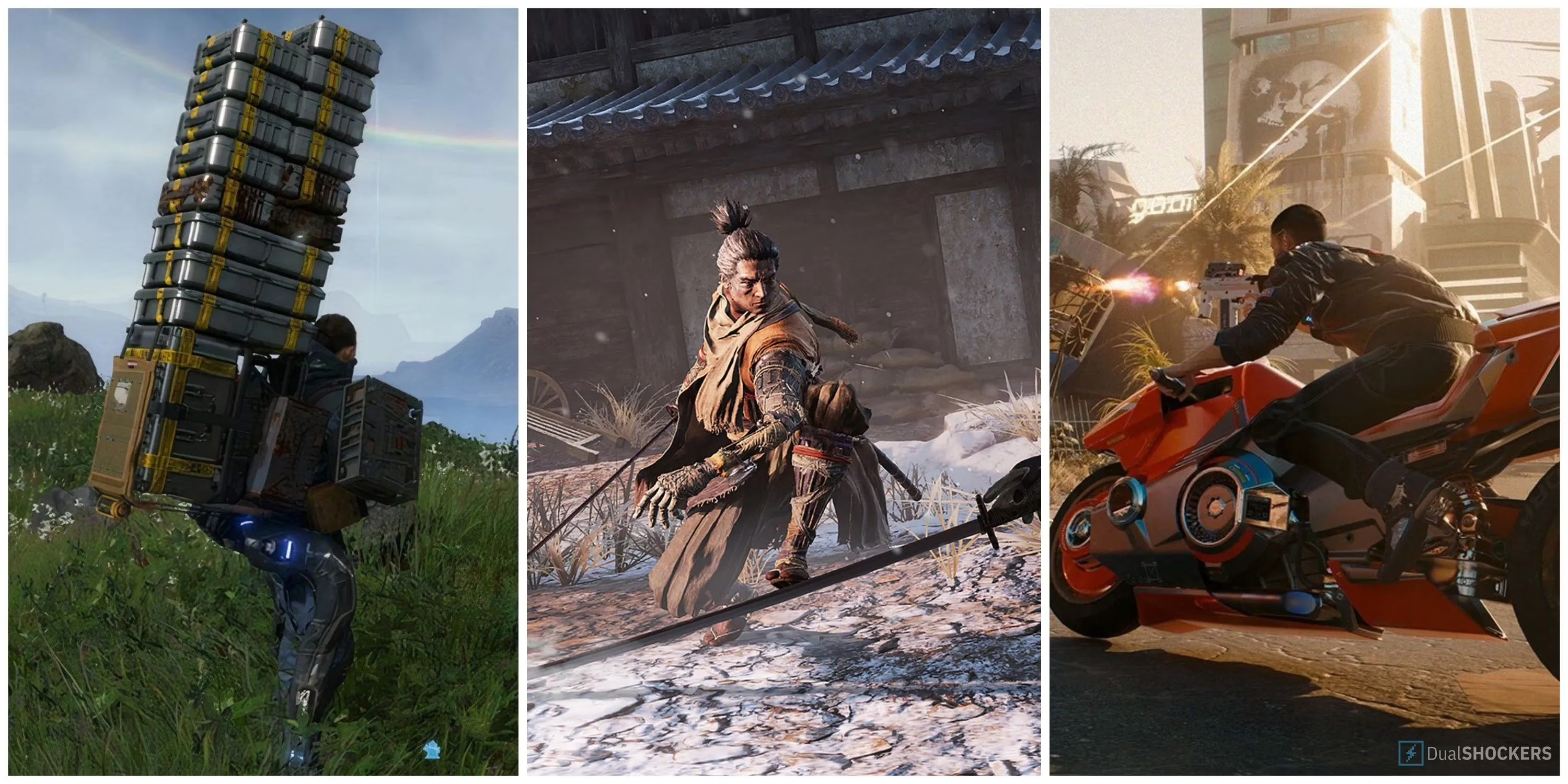
10 Death Stranding – Every Day Is Leg Day
Kojima’s post-apocalyptic delivery simulator is the very definition of a commitment test. I still remember my first hours with the game: I was mesmerized by the haunting landscapes and the meditative rhythm of lugging cargo across a broken America. But I also remember my friends quitting in frustration, screaming at their screens over endless cutscenes and what they called “a glorified walking simulator.”
If you’re willing to sink into its slow, deliberate pace, Death Stranding reveals an emotional core few games ever approach. The asynchronous multiplayer – seeing structures left by other players – creates a quiet sense of camaraderie. Yet for every person who finds it profound, there’s another who can’t stomach the idea of balancing 80 kilos of packages while a baby cries in a jar. So, does the game reward patience? Absolutely. Does everyone have that kind of time? That’s the million‑dollar question.
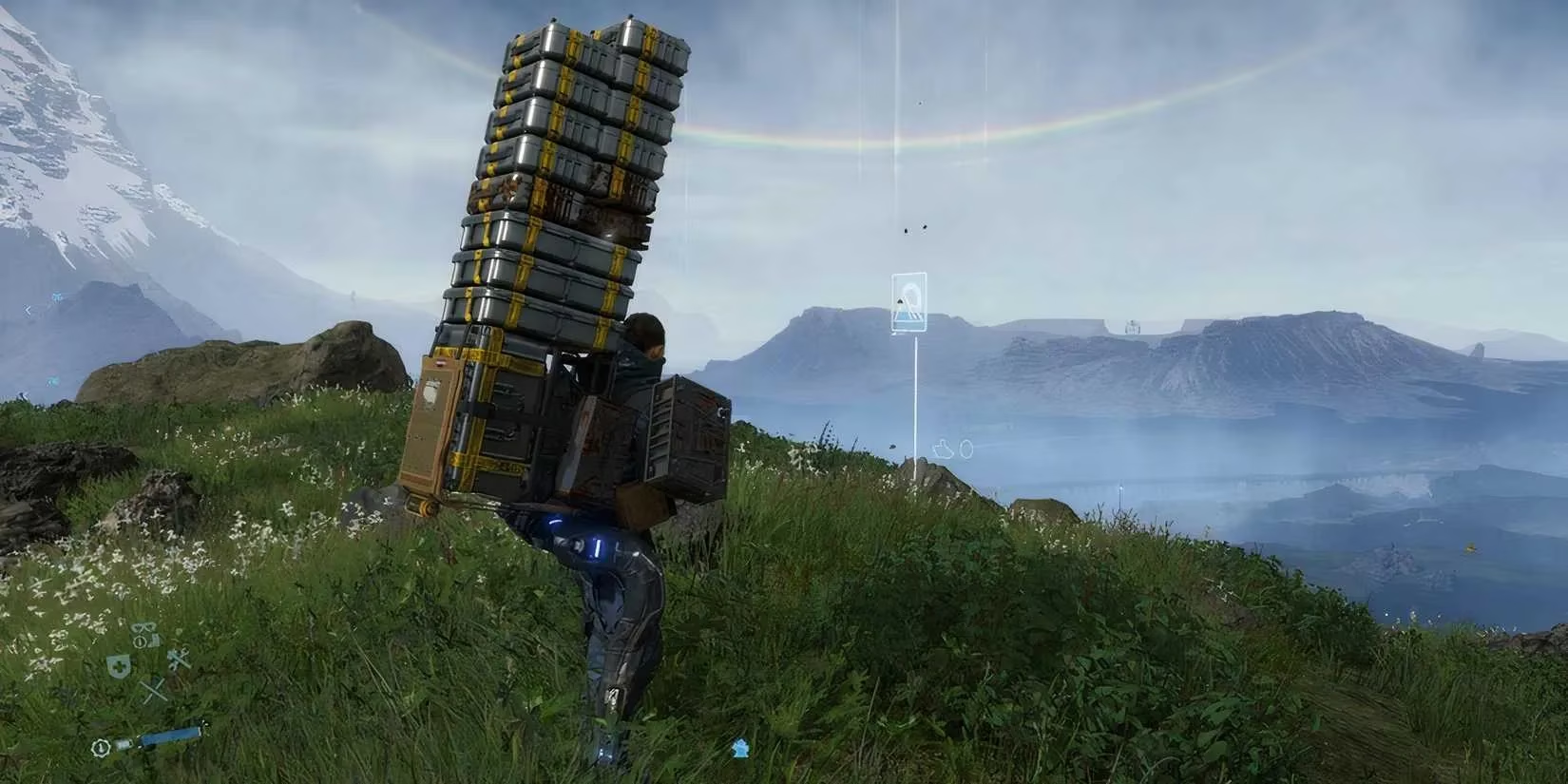
9 Monster Hunter – Gotta Play the Long Game
Some call it “the click.” For Monster Hunter veterans, that click happens the moment they land a perfectly timed True Charged Slash or nail a monster mid‑leap with a Switch Axe. Suddenly, the clunky controls melt away and you’re dancing with a Rathalos. But for those who never feel that spark, the series looks like a slog of chasing monsters across maps, grinding for materials, and fighting against a camera that seems to hate you.
I’ve seen it happen in real time: a friend picks up their weapon, fails to understand the weapon’s flow, and dismisses the entire franchise as “clunky.” Meanwhile, I’m over here with 500 hours across World and Rise. Playing solo only amplifies the disconnect – Monster Hunter was built for camaraderie, and without a hunting party, the learning curve feels like a brick wall. Is it an acquired taste? You bet. But once you acquire it, there’s no going back.
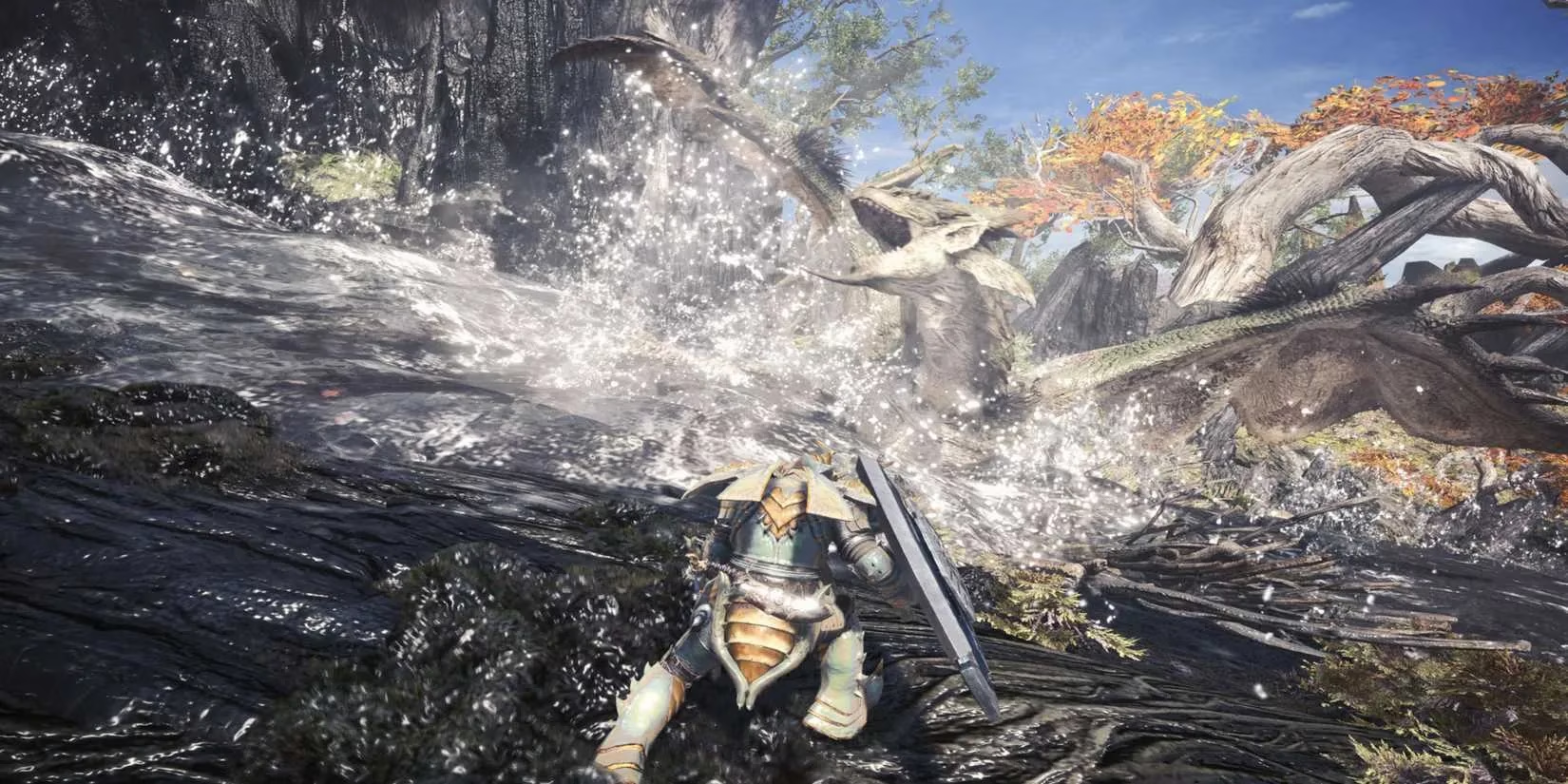
8 Fortnite – Familiarity Breeds Contempt
How can a game that’s played by millions be polarizing? Simple: overexposure and a player base dominated by kids who’ve never known a world without TikTok. Fortnite is an inescapable juggernaut; the sheer statistical probability that you know at least one person who plays it is staggering. The live events, the crossovers, the constant flow of new content – it’s a masterclass in live‑service design.
But drop into a Battle Royale lobby as a newbie and you’ll get boxed, edited on, and eliminated before you can process what happened. Veterans have spent years perfecting building mechanics that feel like an impenetrable barrier to entry. And then there’s the community: for every chill squad of adults goofing around, there’s a lobby full of 12‑year‑olds screaming into open mics. Some players bounce off after a single frustrating match and never look back. Can a game be too big to hate? Fortnite proves that question is more complicated than it seems.
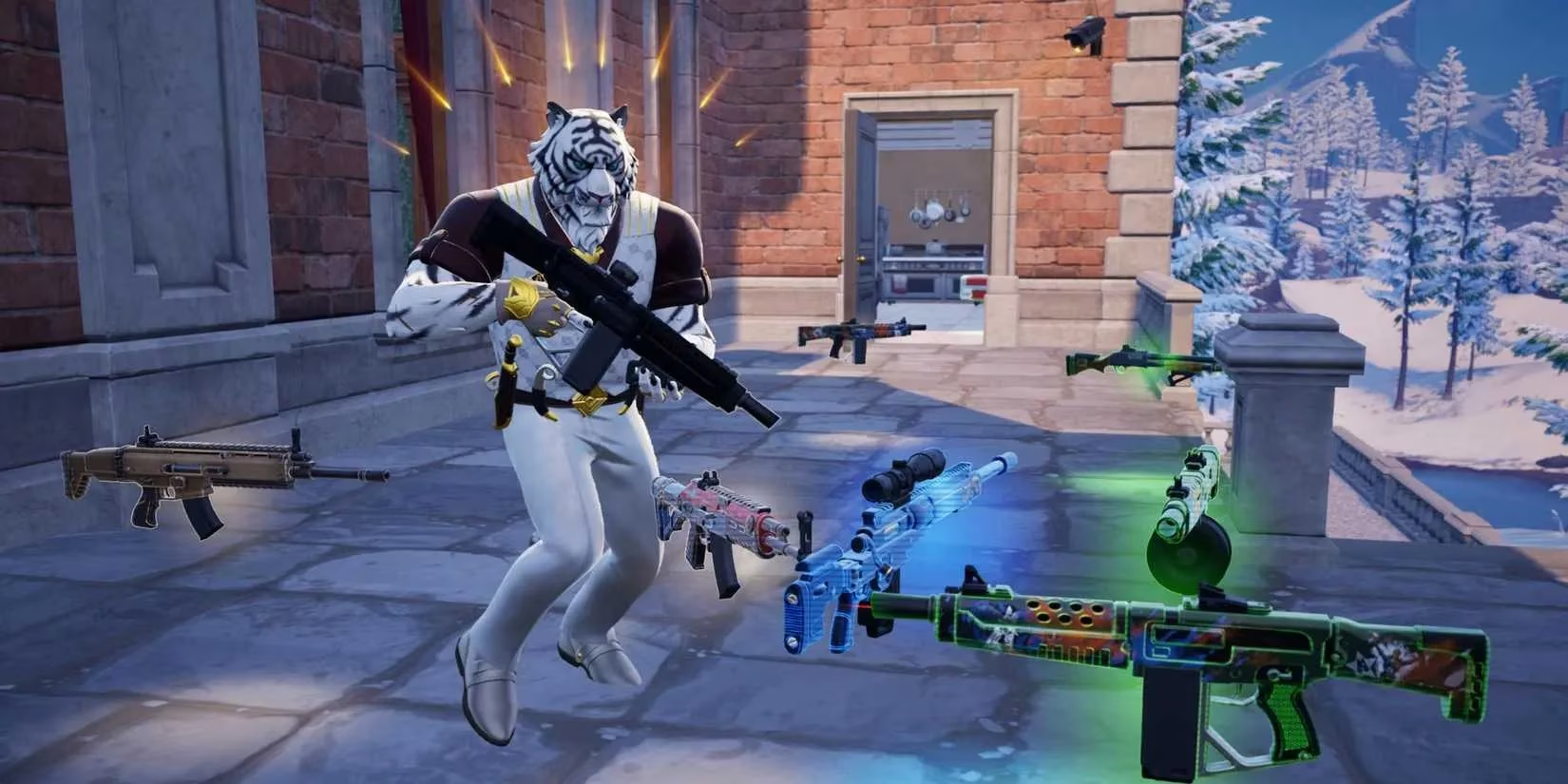
7 Heavy Rain – “JAY-SON!”
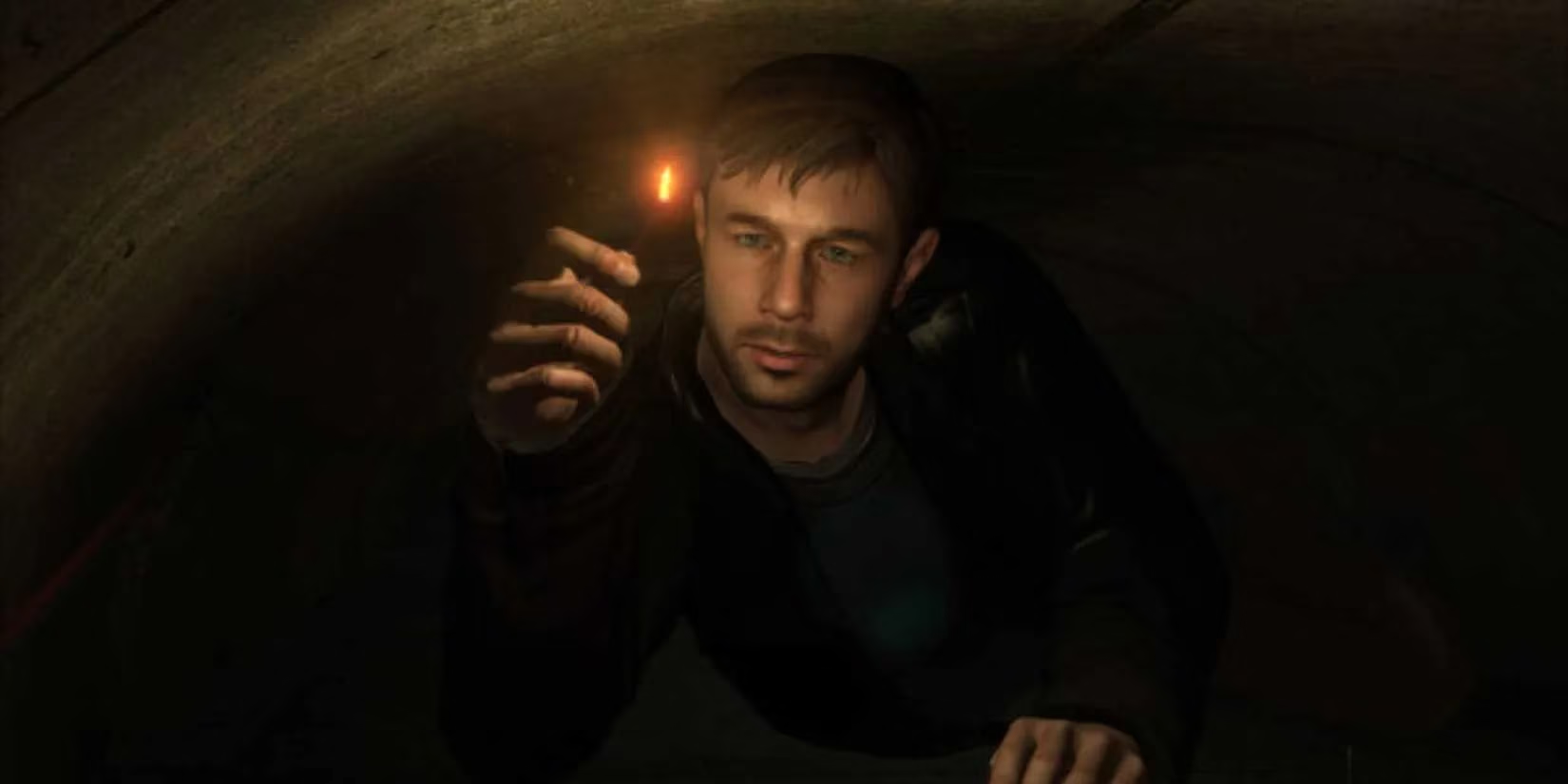
Quantic Dream’s catalogue is a Rorschach test, and Heavy Rain sits at the eye of the storm. I remember playing it on a CRT TV during a dark winter, completely absorbed by the grim murder mystery and the weight of my choices. Or so I thought. Years later, the internet had torn apart the story’s plot holes, the stiff animations, and – yes – the infamous “press X to Jason” meme.
Fans still praise its cinematic ambition and the genuine tension of sequences like the finger‑cutting scene. Detractors point out that the game is almost entirely quick‑time events wrapped in a narrative that falls apart under scrutiny. Are the twists brilliant or groan‑inducing? That depends entirely on your tolerance for soap‑opera logic and the uncanny valley of 2010s character models. It’s a game that demands you meet it on its own melodramatic terms – and not everyone is willing to make that deal.
6 Sekiro: Shadows Die Twice – Only Perfectionists Need Apply
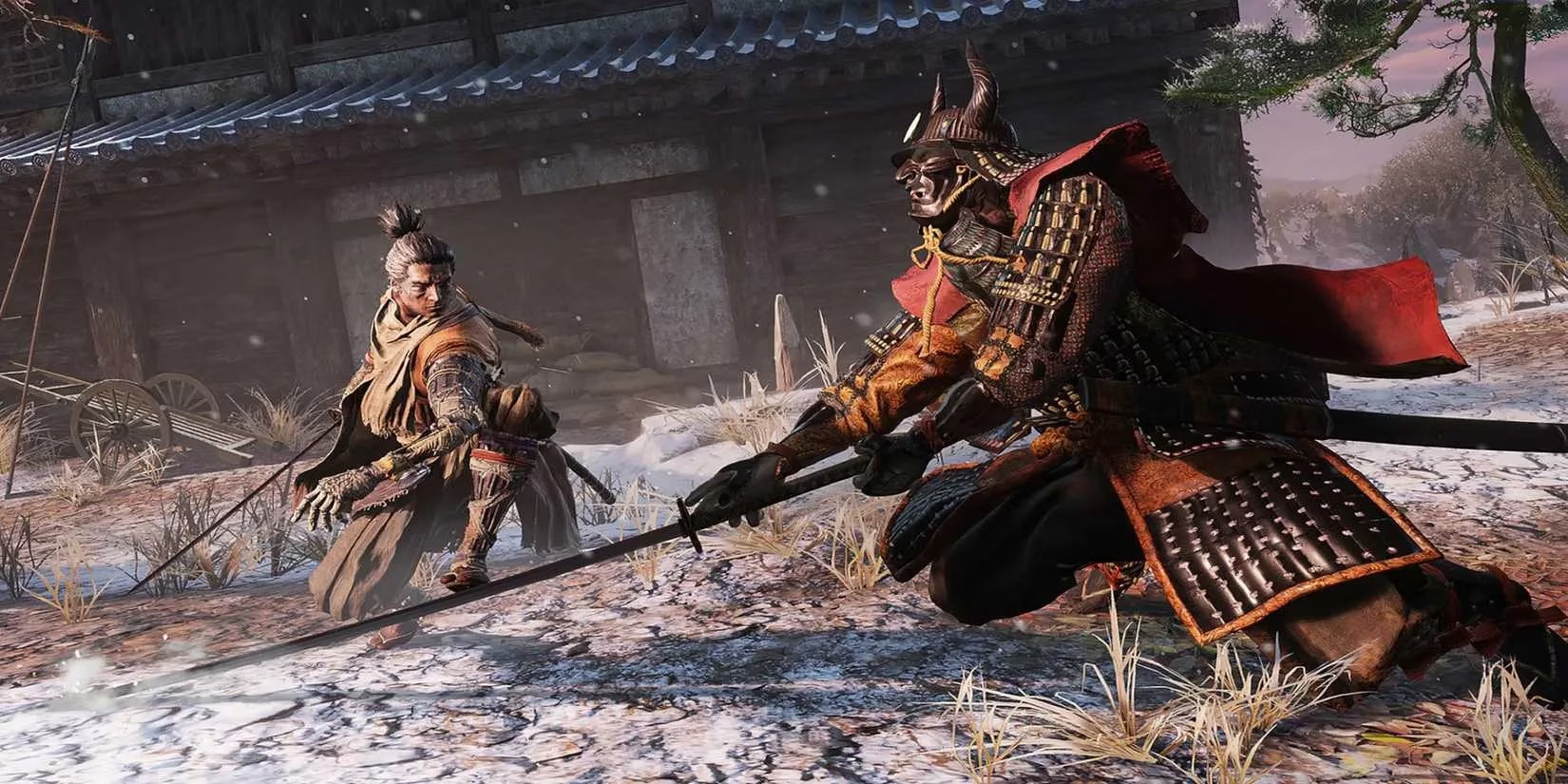
The Soulslike genre is practically the poster child of love‑it‑or‑hate‑it, but even within that family, Sekiro stands alone. FromSoftware stripped away the RPG crutches – no grinding levels, no summoning help, no changing builds. You either master the parry‑and‑strike rhythm or you don’t. I spent four hours on Genichiro, and when I finally beat him, my hands were shaking. That feeling is euphoric.
But for everyone who chases that high, there’s someone who despises having their only option be perfection. Sekiro has no mercy; if you can’t internalize its precise timing, you’ll bounce off harder than a golf ball on concrete. It’s not a game you can brute force. So, is it a masterclass in action design or an exercise in frustration? The answer lies squarely in how stubborn you are – and how much you enjoy having your teeth kicked in.
5 The Legend of Zelda: Majora’s Mask – An Outlier Within Its Franchise
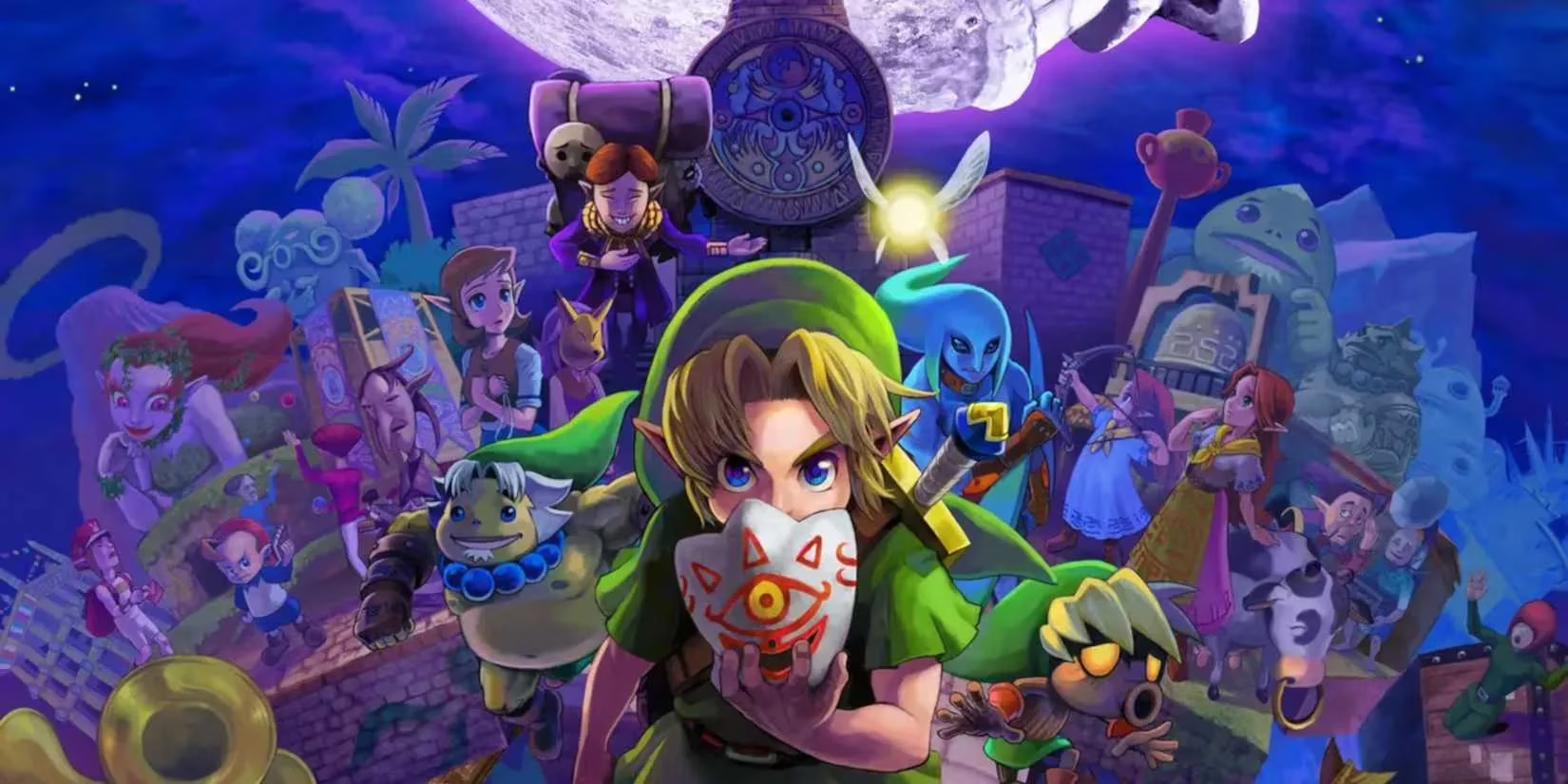
Most Zelda titles want you to explore at your own pace. Majora’s Mask wants you to fail, reset, and try again while watching the world end over and over. The three‑day time loop, the schedule system, the pervasive dread – it’s the black sheep of the franchise. I first played it as a kid and was terrified by the transformation masks and the moon’s constant descent. Returning as an adult, I found a masterpiece about grief and community.
Not everyone wants that anxiety in their Zelda. The clock ticking down adds pressure that diminishes the sense of free‑roaming wonder. Combine that with the darker tone and genuinely unsettling imagery, and you have a game that alienates players who just wanted more Ocarina of Time. Is it a bold artistic statement? Yes. Is it what every fan wanted? Hardly. And that’s exactly why it’s so divisive.
4 Cyberpunk 2077 – Still Some Leftover Bad Blood
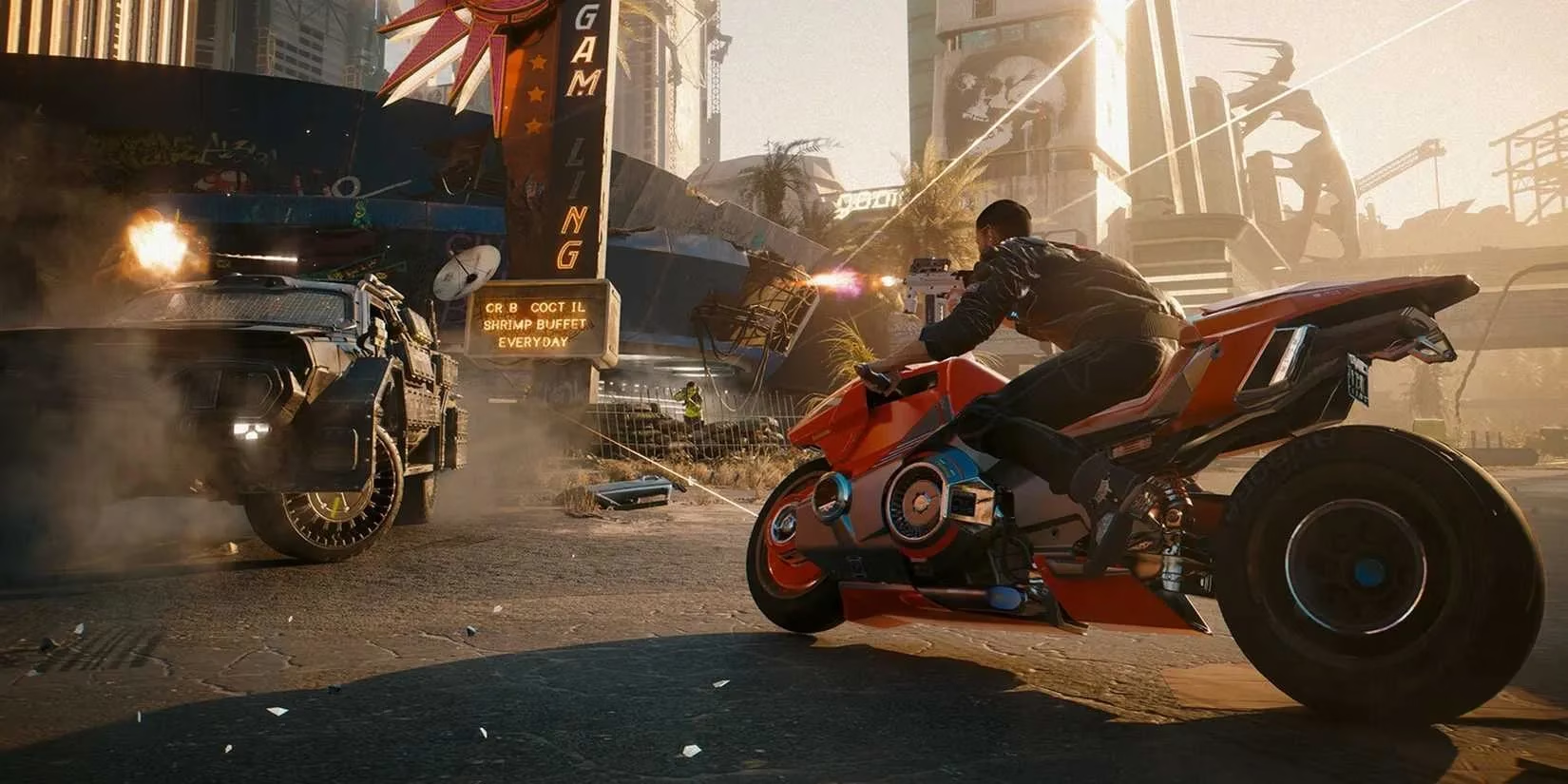
Even in 2026, the ghost of Cyberpunk 2077’s launch still haunts it. I was there on day one, playing on a base PS4, and the experience was catastrophic. T‑posing NPCs, crashes every hour, and a world that felt like a cardboard movie set. Yet here we are, years later, with the Phantom Liberty expansion and patch 2.0 transforming it into something genuinely special – a gripping story, meaningful builds, and a Night City that finally feels alive.
But can a game ever truly wash away the stink of a trainwreck launch? Many players I know still won’t touch it, and honestly, I can’t blame them. First impressions are everything, and no amount of “we fixed it” can erase the memory of spending $60 on a broken promise. For every new fan discovering it through the 2025 Complete Edition, there’s a former player who will never trust CD Projekt Red again. Redemption is possible, but it’s a hard sell.
3 BioShock Infinite – Good Ol’ Quantum Mechanics
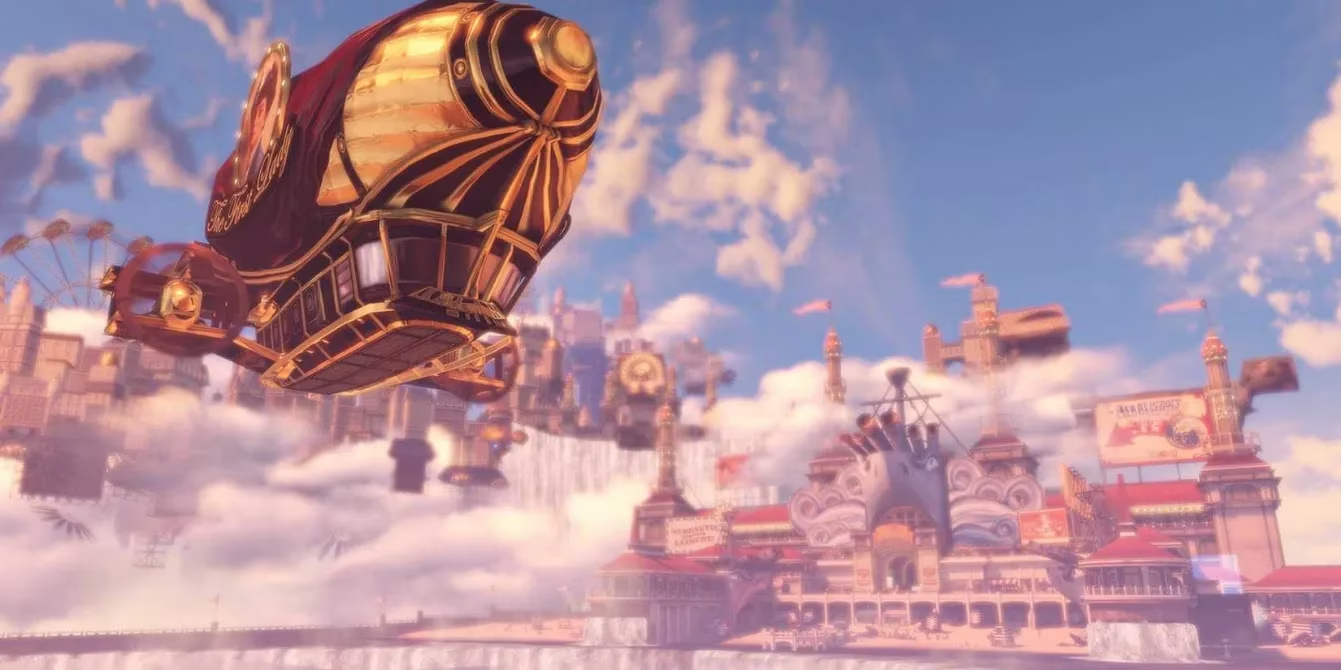
I loved BioShock Infinite in 2013. Columbia was stunning, Elizabeth was a revelation, and that ending blew my mind. But revisiting it years later, the cracks are impossible to ignore. The combat, once praised, now feels restrictive compared to the sandbox freedom of BioShock 1 and 2 – why can I only carry two guns? The narrative leans so heavily on multiverse hand‑waving that it starts to feel more like a cheat than a clever twist.
This game’s reputation has undergone a horseshoe trajectory: beloved at launch, then heavily scrutinized, and now occupying a spot where passionate defenders and bitter critics clash endlessly. Does the emotional core between Booker and Elizabeth outweigh the messy mechanics? For some, yes. For others, Infinite is a prime example of style over substance. It’s a game that demands you turn off your critical brain, and not everyone is willing to do that.
2 Hearthstone – Just One More Pack…
Card games live and die by your childhood. If you grew up shuffling Yu‑Gi‑Oh decks or trading Magic cards between classes, Hearthstone feels like coming home – a polished, digital tavern where every match tells a story. The sound of opening a legendary pack still triggers a dopamine hit I can’t quite explain. The problem? If you don’t have that background, Hearthstone offers nothing you can’t find elsewhere, and its gacha‑style pack system will immediately repel anyone sensitive to monetization.
I’ve introduced friends to it, and the split is instant: one group gets hooked on theorycrafting and Arena runs, the other asks why they should bother with randomized card pulls when they could just play a full‑price game. Add in the ever‑expanding card pool that makes it tough for newcomers, and you have a game that’s either your daily obsession or a complete miss. As they say, you either die to face hunter on turn five or you live long enough to become the control warrior.
 .jpg?q=70&fit=crop&w=825&dpr=1)
1 Disco Elysium – You Need That Disco Spirit
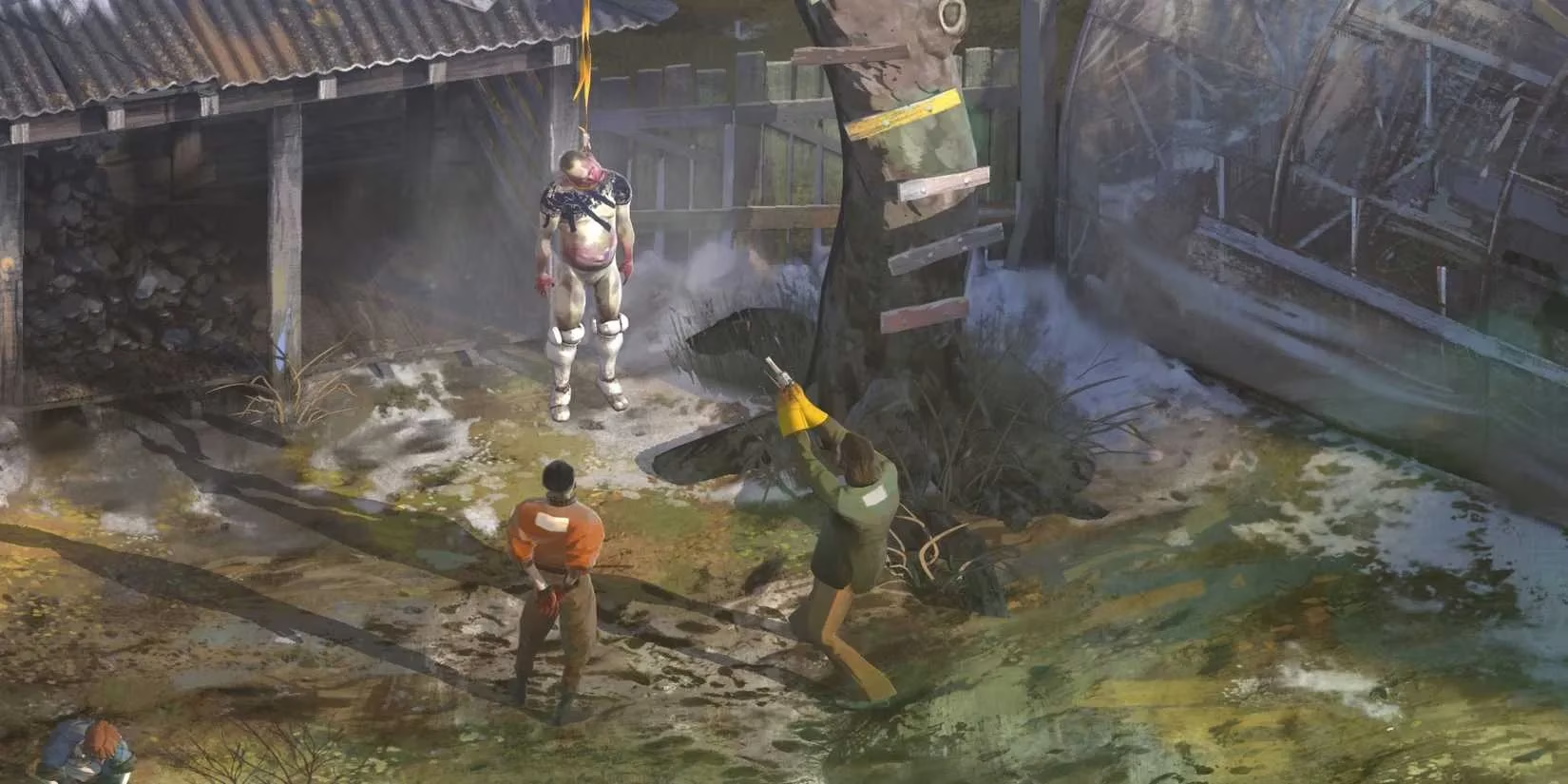
At the top of our list sits a game that is fundamentally a novel in digital form. Disco Elysium is brilliant, heartbreaking, and philosophical in a way that few RPGs dare to be. The skill system – where different parts of your brain argue with you – is a stroke of genius. I’ve spent entire playthroughs just internalizing thoughts and having conversations with my own limbic system.
But let’s be real: it’s also a game with more text than War and Peace, no combat system, and a character sheet that can intimidate even veteran CRPG players. Min‑maxers will struggle because failure is often more interesting than success, and the game actively rewards bizarre, self‑destructive builds. If you don’t connect with its disco‑infused melancholy and Marxist undertones, you’ll wonder why you’re reading a book with dice rolls. But if you do connect – if you let yourself sink into the ruins of Revachol – it’s an unforgettable, soul‑changing experience. Now, can you handle the sheer amount of reading? That’s where the line is drawn.