
The Epic vs Apple Saga Continues: Fortnite's App Store Return Hits Another Snag
The dramatic Fortnite iOS return saga highlights the escalating corporate feud between Epic Games and Apple, with a judge now demanding answers. This high-stakes delay frustrates millions of players awaiting the game's comeback. The ongoing legal battle creates a lose-lose situation for all parties involved.
What was supposed to be a triumphant homecoming for Fortnite on Apple devices after a nearly five-year exile has turned into a bureaucratic circus worthy of its own battle royale. The tech world watches, popcorn in hand, as what should have been a straightforward process—submitting an app for review—has devolved into a high-stakes game of corporate chicken. At the heart of it all is a simple question: where in the world is Fortnite for iOS?
The Judge Steps Into the Ring
Enter Judge Yvonne Gonzalez Rogers, who decided she'd seen enough of this digital standoff. She's essentially thrown a yellow flag on the play, filing a new order that requires Apple to "show cause"—a fancy legal way of saying "explain yourself, buddy." The judge wants to know why the tech giant has been giving Epic Games' submission the silent treatment, ignoring the original court injunction that was supposed to pave the way for Fortnite's return. Talk about leaving someone on read!
Epic's CEO, Tim Sweeney, has been the unofficial play-by-play commentator for this whole drama. He took to social media (where else?) to break the news, explaining that Apple's response wasn't a "yes" or a "no"—it was more of a "we'll get back to you... maybe in June?" According to Sweeney, Apple decided it would just sit on Fortnite's submission until after the 9th Circuit Court rules on their stay request, which could take until late May or June of 2026. That's like telling your friend you'll return their game console after you finish the entire campaign... twice.
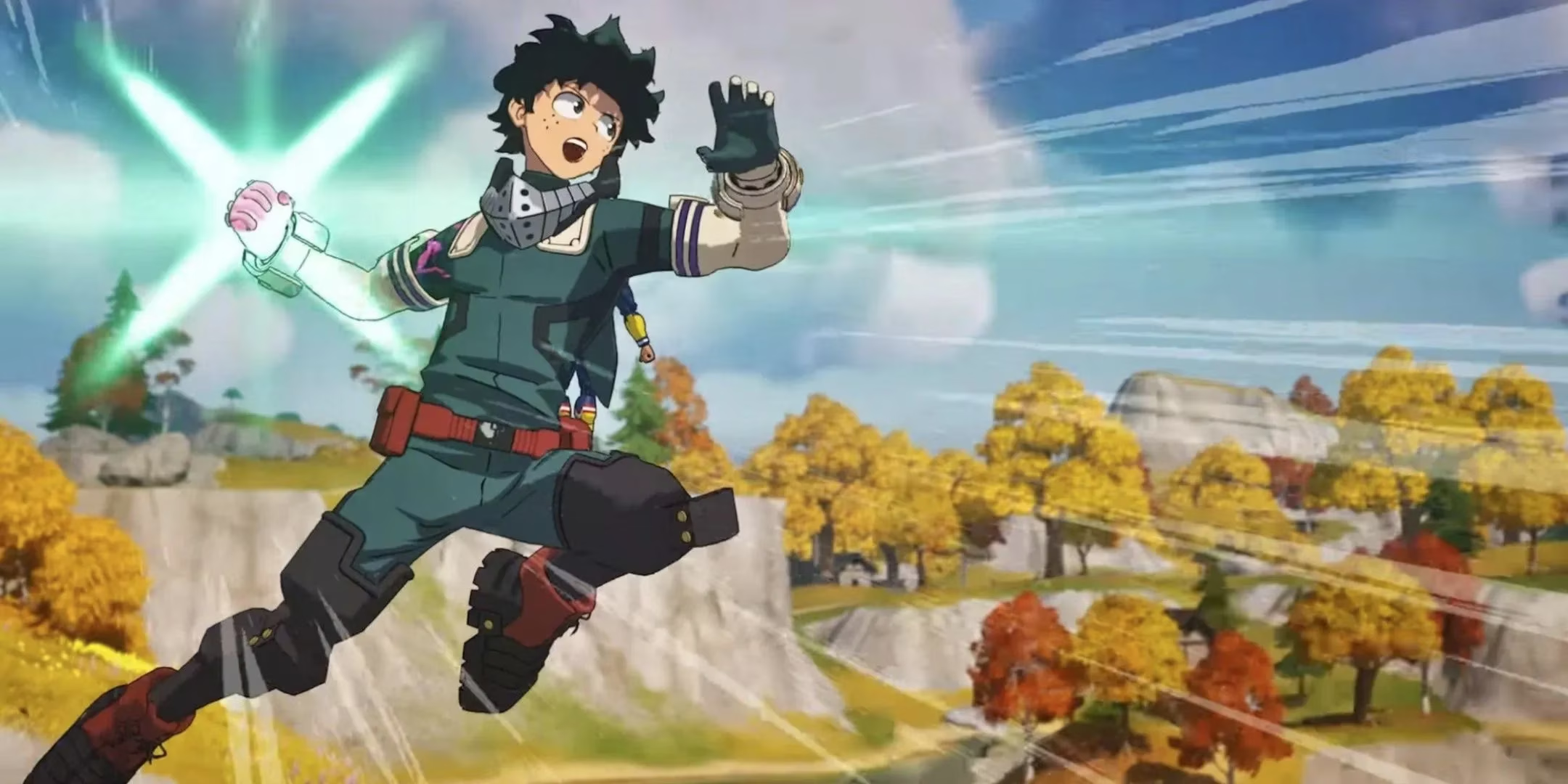
The Great iOS Wait
Here's the kicker: Fortnite was supposed to be back on iPhones and iPads in the U.S. over a week ago. The silence from Apple's review team has been deafening, especially considering the company proudly boasts that 90% of apps get reviewed within 24 hours. For Fortnite? Crickets. It's enough to make you wonder if the submission got lost in the same digital void where all your missing socks go.
Sweeney hasn't been shy about voicing his frustrations online. Whether he's critiquing Apple's new policies on third-party payments or pointing out the army of "Fortnite" clones already lounging comfortably in the App Store, the man has been on a one-man social media crusade. You've gotta hand it to him—when you're going up against one of the biggest companies on the planet, you might as well bring the drama to the public square (also known as Twitter, or whatever it's called these days).
A Lose-Lose-Lose Situation
Let's break down who's losing in this whole mess:
| Party | What They're Losing | The Vibe |
|---|---|---|
| Players | The ability to play Fortnite natively on iOS devices they already own. | 😫 Major FOMO as friends play on other platforms. |
| Epic Games | Revenue from a massive mobile player base and closure on a legal battle that's dragged on for years. | 🏛️ Stuck in legal limbo, unable to move forward. |
| Apple | Potential goodwill and now facing further legal scrutiny from a federal judge. | ⚖️ Looking increasingly stubborn in the court of public opinion. |
It's the corporate equivalent of a three-car pileup where everyone's insurance rates go up. Mobile gamers are left refreshing the App Store like it's 2017 all over again, Epic can't put this nearly decade-long lawsuit to bed, and Apple now has a federal judge asking for its homework. Oof.
The Waiting Game
So what happens now? The ball is officially in Apple's court (both figuratively and legally). They have to provide the judge with a satisfactory explanation for why they've been ghosting Epic's submission. Some possible explanations they might consider:
-
"We're just really, really busy right now" (Unlikely to impress a federal judge)
-
"Our app review team is on a permanent coffee break" (See above)
-
"We're waiting to see if the metaverse becomes a real thing first" (2026 is wild, but not that wild)
The reality is probably more bureaucratic, involving legal teams, policy interpretations, and enough paperwork to build a literal fort. But for players just wanting to drop into the island on their iPad during lunch break, the whole situation feels... well, kinda silly.
The Bigger Picture
This isn't just about one game anymore—it's become a symbol of the ongoing tension between app developers and platform holders. When a company like Epic, with all its resources, gets stuck in review purgatory, it makes you wonder what happens to the little guys. The whole saga raises questions about:
-
Transparency: What actually happens during app review?
-
Consistency: If 90% of apps get reviewed in 24 hours, what puts you in the other 10%?
-
Power Dynamics: Who really controls the gateway to our devices?
As we roll deeper into 2026, with new gaming platforms and distribution models emerging, this Fortnite-shaped stalemate serves as a reminder that the digital frontier still has its share of old-fashioned standoffs. The only thing missing is a tumbleweed blowing through the App Store's "New Games" section.
For now, everyone waits. Players wait for the game, Epic waits for approval, Apple waits for its next court date, and the judge waits for an explanation that makes sense. In the grand tradition of internet drama, we'll all just have to stay tuned for the next episode. Will Fortnite finally come home to iOS? Will Apple's explanation satisfy the court? Or will this turn into another multi-year saga? Only time—and probably several more legal filings—will tell. In the meantime, maybe check out one of those Fortnite clones? (Just kidding, Tim Sweeney would never forgive us.)