
The Overhyped Hall of Fame: 10 Games That Steal Spotlight but Not Hearts
A 2026 retrospective brutally re-evaluates 10 overrated games, from Deathloop to Final Fantasy 9, exposing why their 10/10 scores were absurd.
It is the year 2026, and the gaming landscape looks radically different from what it was just a few short years ago. In an era of constant connectivity, live-service churn, and the relentless pursuit of the next viral hit, the industry has a bit of an obsession problem. Every season, a new title is crowned as the "Greatest Of All Time," a flawless masterpiece destined to redefine the medium. Yet, as the dust settles and the hype train leaves the station, players are often left holding a controller and a question: was that really as good as they said? Buckle up, because it is time for a brutally honest trip down memory lane, reviewing ten sacred cows that, while being objectively decent software, received a level of adulation that borders on the absurd.
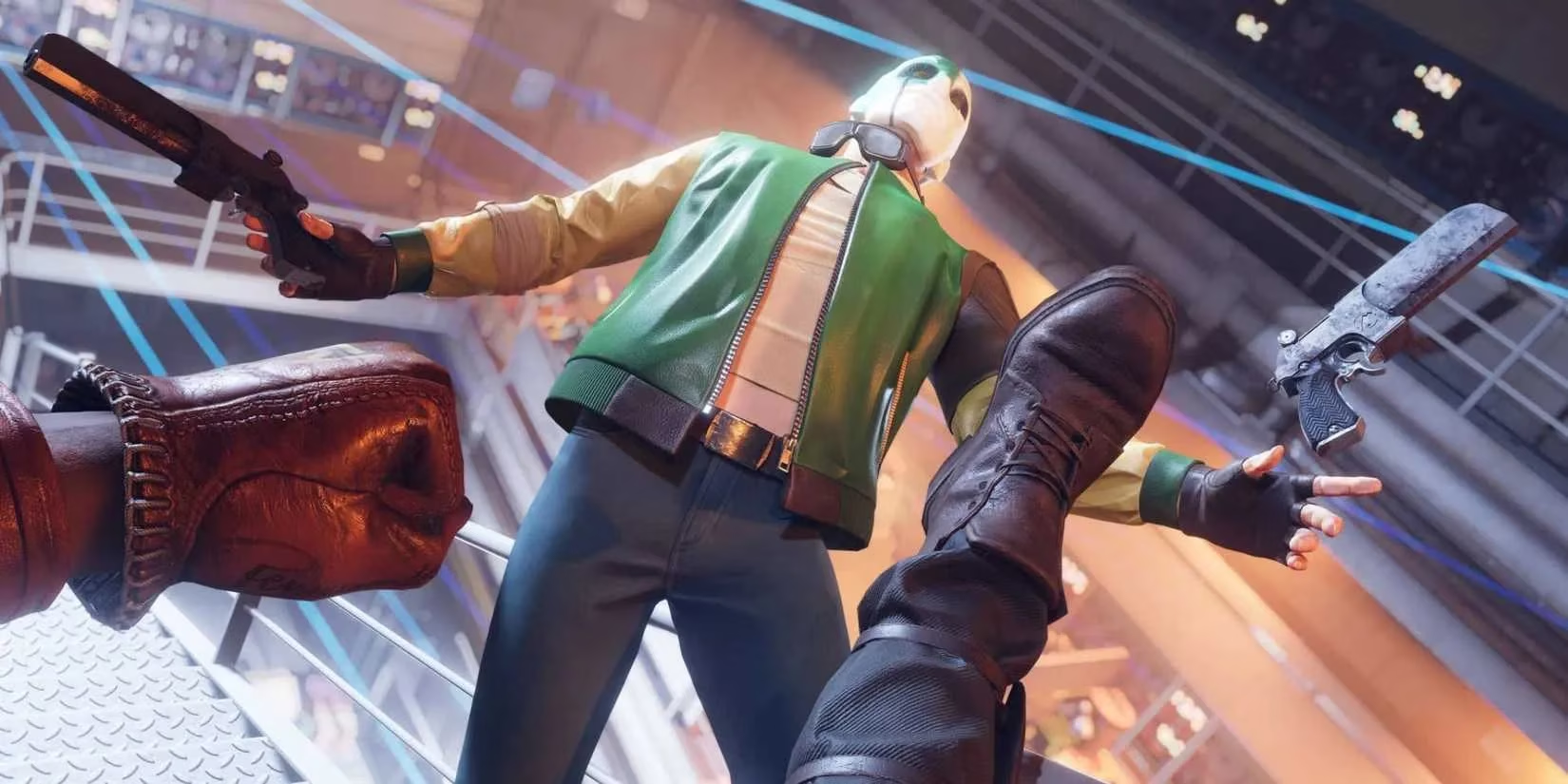
Take Deathloop, for example. Arkane Lyon’s time-looping assassin sim launched alongside the PS5’s awkward teenage years, and critics went absolutely bonkers. A meteor shower of 10/10 scores suggested it was a genre-defining event. The reality was a stylish but spectacularly repetitive shooter that only dared to ask, "What if Dishonored had less charm and a more annoying antagonist?" The gunplay felt punchy, mostly thanks to the excellent DualSense controller features, but that was a thin veil over the dreary task of killing eight targets in a static world. The built-in repetition wasn't a bug; it was the entire feature set. Add in Julianna, who was about as fun as a telemarketer calling during dinner, and you had a game that looked like a masterpiece in trailers but played like a very long, violent Groundhog Day without Bill Murray’s wit. It was a good game, absolutely, but a 10/10? Not by a long shot.
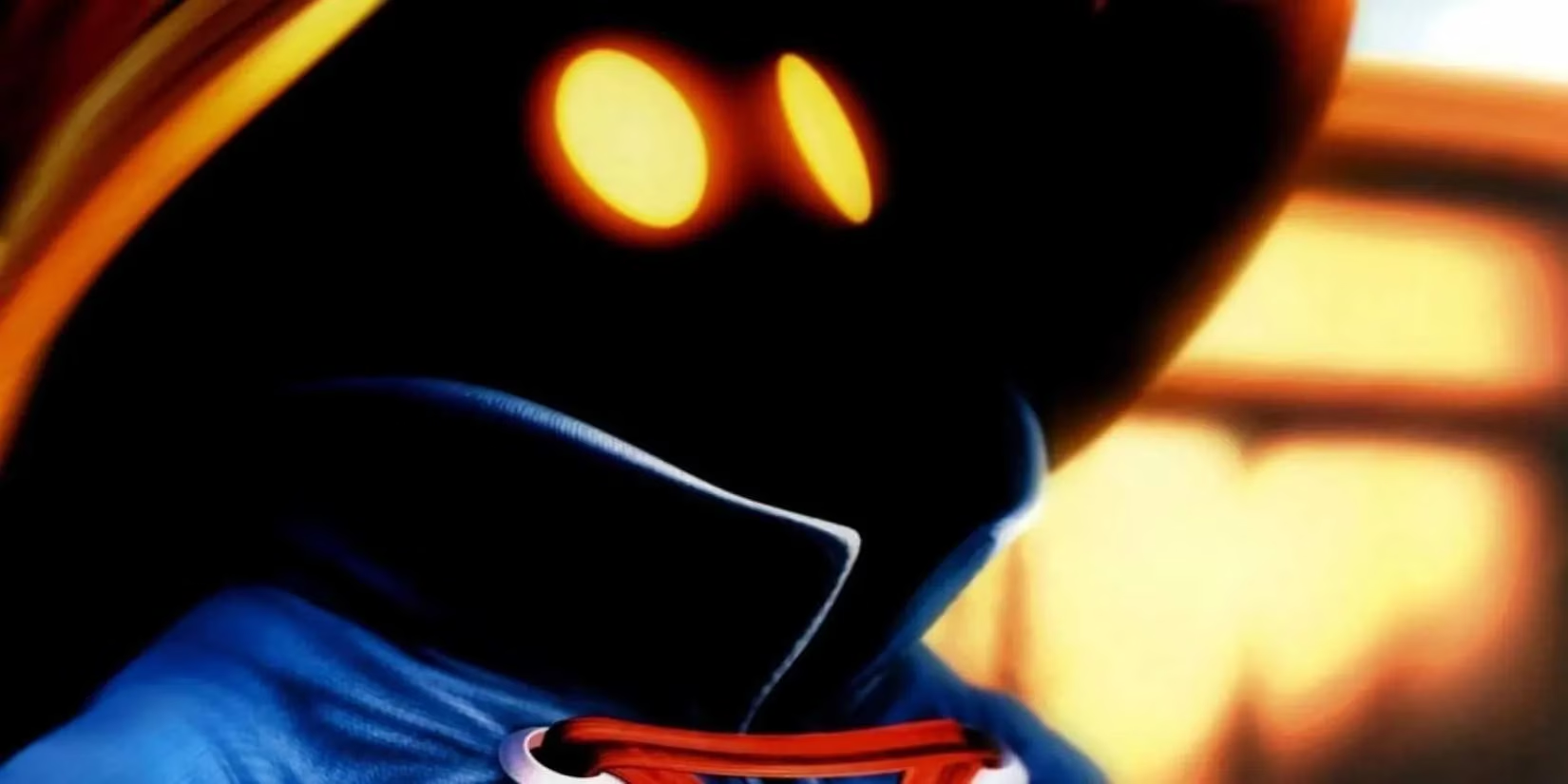
Venturing into the realm of sacred nostalgia, Final Fantasy 9 sits on a throne built by devotees who claim it is the pinnacle of the legendary franchise. It was a love letter to the pre-FF7 era, complete with black mages and medieval airships. However, taking the rose-tinted glasses off reveals a narrative that feels shockingly incomplete. Following the divisive complexity of Final Fantasy 8, this chapter felt like a safe retreat into dullness. Characters like Amarant, a stoic bounty hunter who joins the party late, might as well have been shipped in a FedEx box labeled "No Backstory Included." And then there is Quina, a monstrous creature whose entire personality can be summarized with a single emoji: 🍔. It is hard to consider a game a narrative titan when one of your core heroes is merely a hungry swamp creature with zero development. It remains a very good RPG, but pretending it can stand shoulder-to-shoulder with the actual giants of the series is a fairytale spun by the most stubborn of fans.
The loudest example of a recent game that fooled the world is God of War: Ragnarök. It swept Game of the Year awards in 2022, a cinematic avalanche of tears and beards. Yet, as Kratos’ supposed masterful finale, it felt less like the end of the world and more like a sitcom family vacation interrupted by a brief skirmish. The combat was the biggest sinner. In four long years of development, Santa Monica Studio handed us one new weapon: a spear so underwhelming it felt like a DLC toy. They also decided hand-to-hand combat was too fun and gutted the entire skill tree, making the God of War feel significantly less godly than he did in 2018. The infamous Ironwood segment with Atreus and Angrboda became a benchmark for misery—a three-hour slog of picking fruit that time has not been kind to in 2026, where patience for glacial pacing has withered to zero. And the actual Ragnarök event? A laughably small scuffle in a muddy village where Thor and the World Serpent’s epic battle played out as a five-second blur in the background. It was a beautiful, well-acted, and deeply overrated mess.
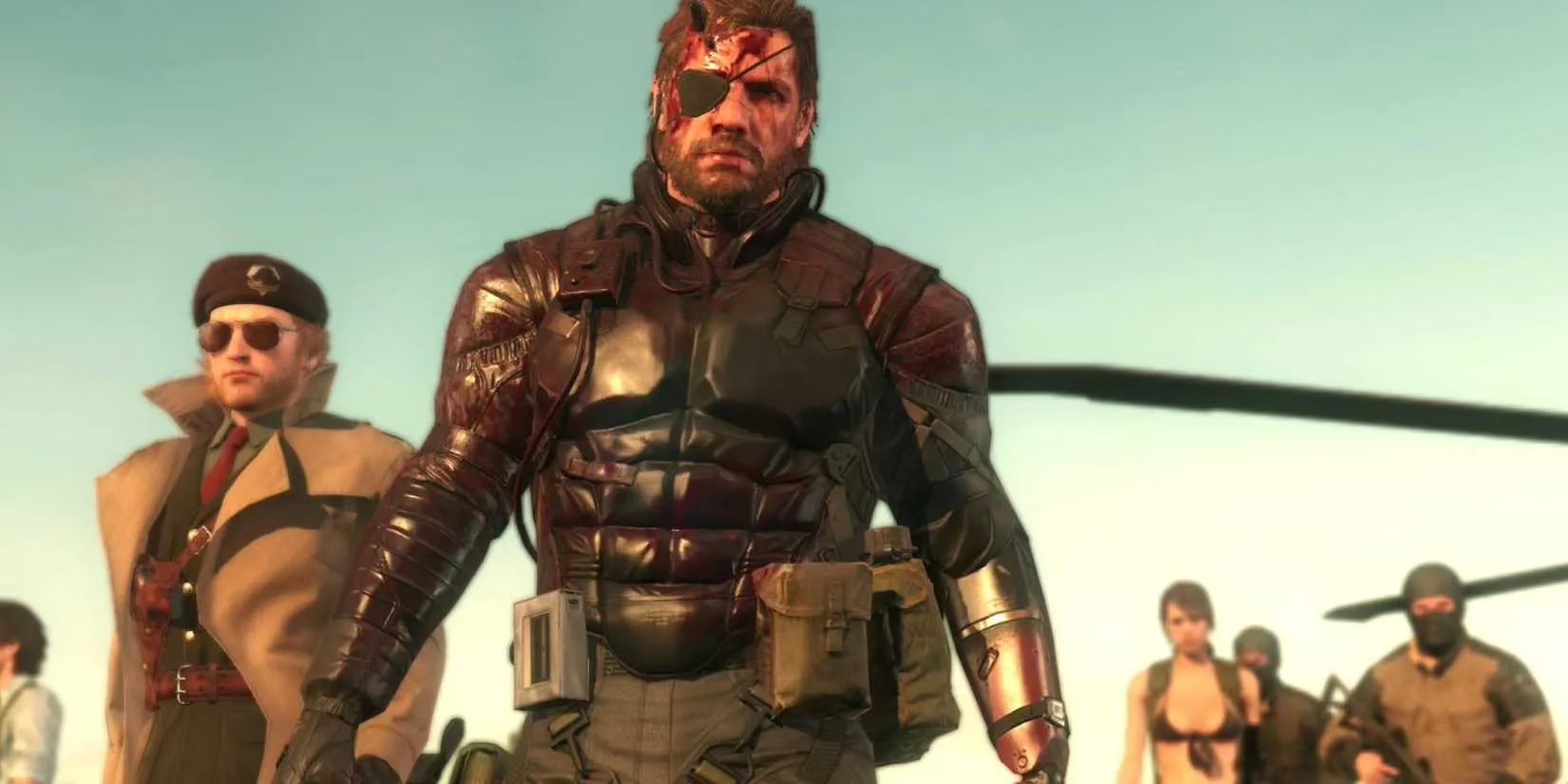
Before we had the FedEx Simulator that Kojima would eventually make, he left us with Metal Gear Solid V: The Phantom Pain. This is the ghost that haunts the industry, a monument to what could have been. It has, without question, the greatest third-person stealth-action gameplay ever coded. The fluidity and freedom are immaculate. Too bad the game hosting that mechanical perfection was unfinished. Around the halfway mark, the game simply stops trying, regurgitating identical missions with higher difficulty modifiers as if you wouldn't notice. The player is then treated to a slideshow of cut content for Chapter 2, teasing Liquid Snake stealing a Metal Gear, only for the credits to roll on a void of zero resolution. The villain, Skull Face, is a bumbling skeleton with a Jeep and a dream, and Snake himself is rendered a mute bystander in his own trauma. The gaming press handed it glowing reviews as if the missing third act didn't matter, but playing it today feels like reading a novel with the final chapters torn out.
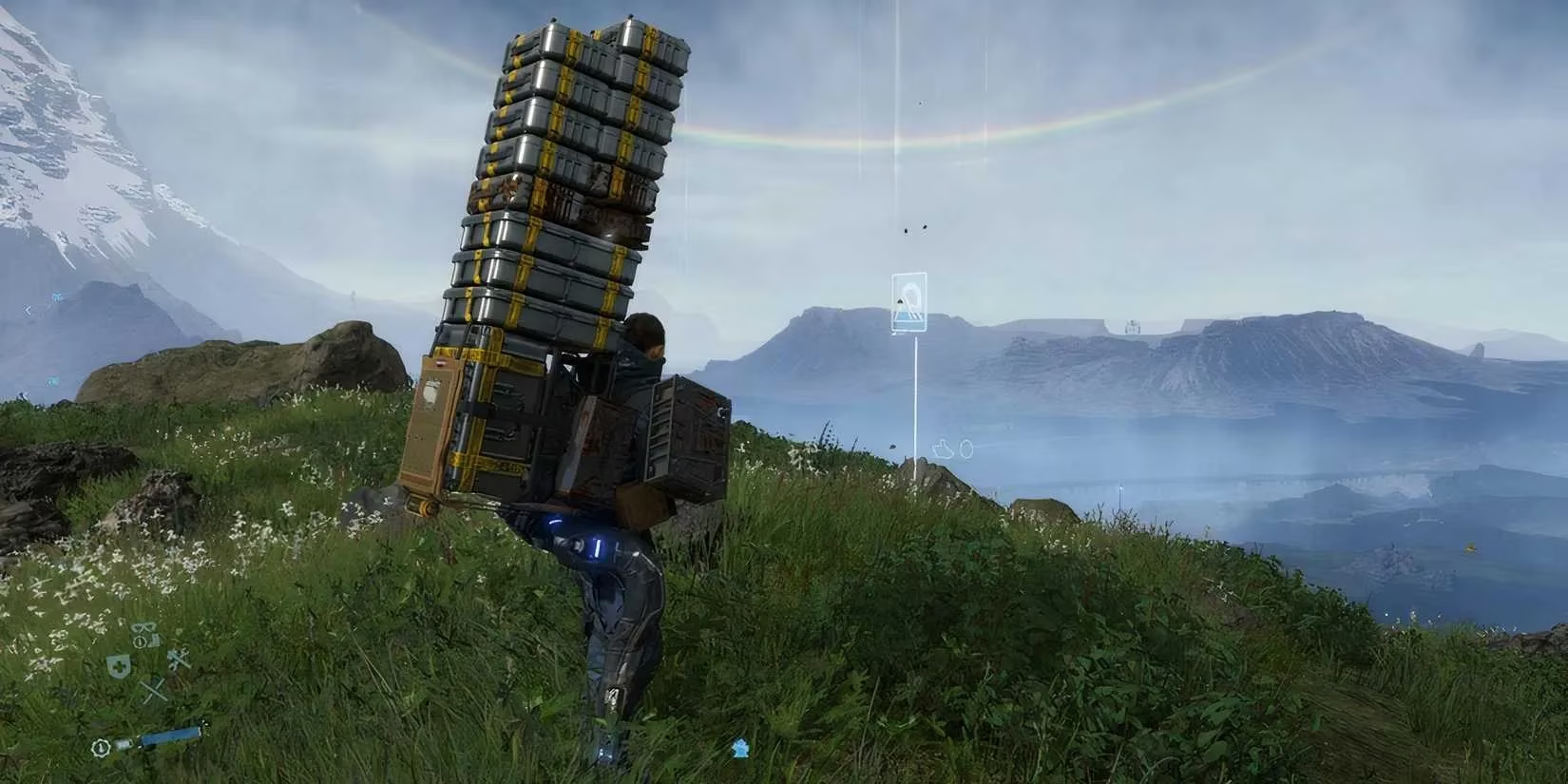
Kojima finally got his creative freedom with Death Stranding, a game that tricked the entire 2019 critics' circle into thinking loneliness was fun. Packed with celebrities like Norman Reedus, it scored a deluge of 100/100 ratings. The reality is it's a job simulator where you carry boxes. For hours. You stumble, you fall, your baby cries, and you throw grenades filled with your own urine at invisible ghosts. That’s not hyperbole; that’s the gameplay loop. The game showed a profound lack of respect for the player’s time, acting as a grueling wilderness trek punctuated by a story so convoluted that even a conspiracy theorist would call it confusing. While there is a flicker of hope that Death Stranding 2: On the Beach in 2025 fixed the pacing hell, the original remains a pretentious, if visually stunning, exercise in monotony that critics praised largely because they were too afraid to call it boring.
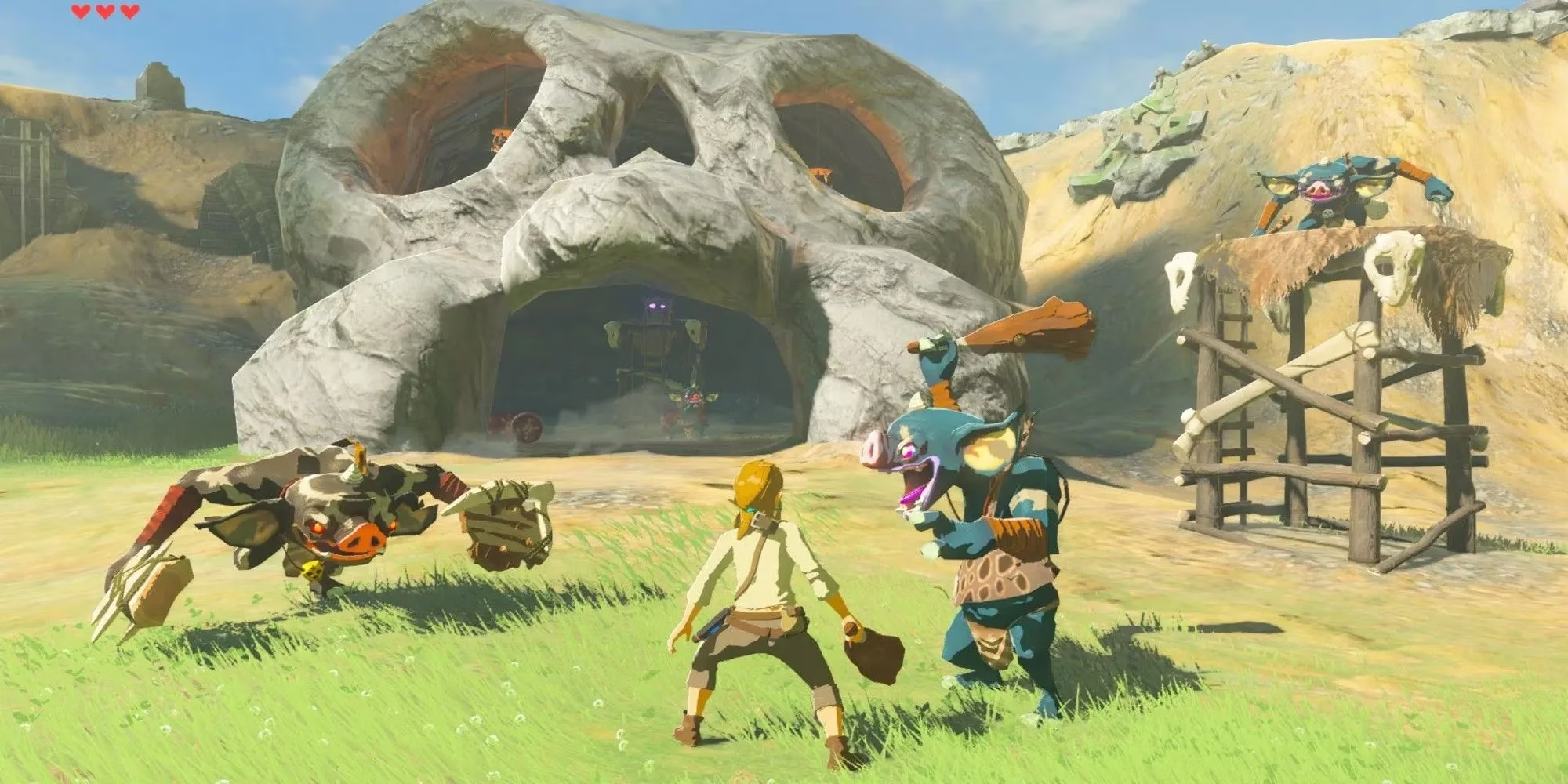
The one that might draw the most pitchforks is Breath of the Wild. Yes, the 2017 Game of the Year. It was a revolutionary rebirth for the franchise, a champion of physics-driven exploration. But looking past the cel-shaded sunrises, the world is barren. It is a charming expanse of bountiful nothing. The side quests, compared to the narrative depth of The Witcher 3, were laughable fetch quests. But the cardinal sin, the mechanic that lurks in the grass to strike down any sense of progress, is the weapon degradation system. Discovering a cool weapon in any other game is a dopamine hit. In Breath of the Wild, finding the legendary Master Sword only to have it "run out of energy" after a few swings felt like a slap in the face. Nintendo also decided that iconic, elaborate dungeons were not necessary, replacing them with 120 bite-sized, same-looking shrines. It is a physics sandbox of genius, but calling it flawless while ignoring these hair-pulling design decisions has always been a collective delusion.
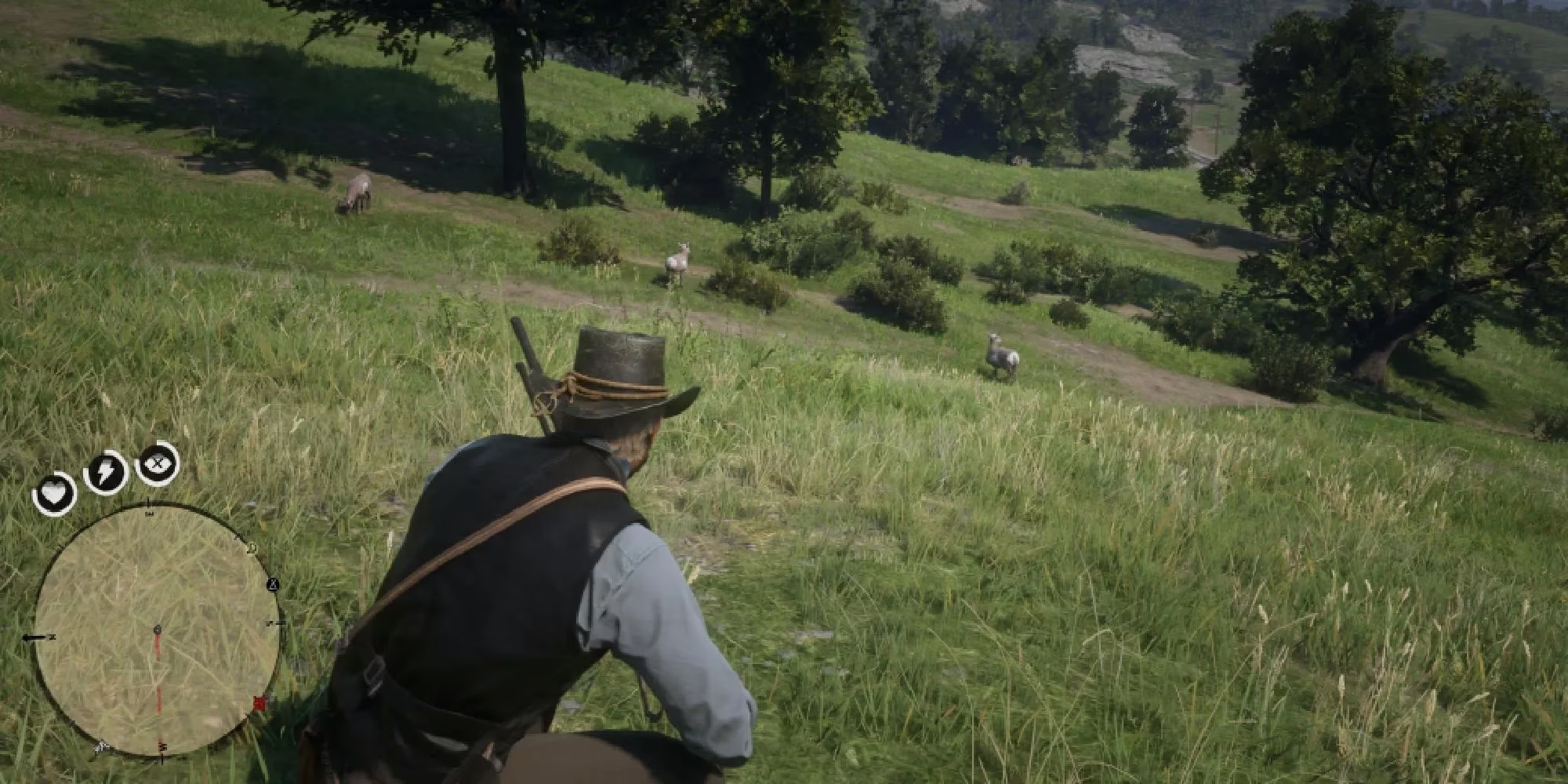
Red Dead Redemption 2 is possibly the most stunning piece of art that is secretly a chore to interact with. Rockstar crafted a visual masterpiece in 2018 that still holds up in 2026, with voice acting that moves the soul. But they forgot to put the "game" in "video game." The mission design is comically restrictive, a rigid script where deviating five feet to the left results in a "Mission Failed" screen. It is an open world that demands you play it on tightly controlled rails. The gunplay, too, is archaic, a clunky simulation of heavy weaponry that prioritizes realism over the pure joy of shooting. Rockstar insisted on a profound slowness for every animation, from looting a body to skinning a rabbit, testing the limits of human patience. It is a five-star interactive movie, but players who value responsive, fun gameplay over cinematic suffering have long known it doesn't deserve the flawless masterpiece badge it carries.
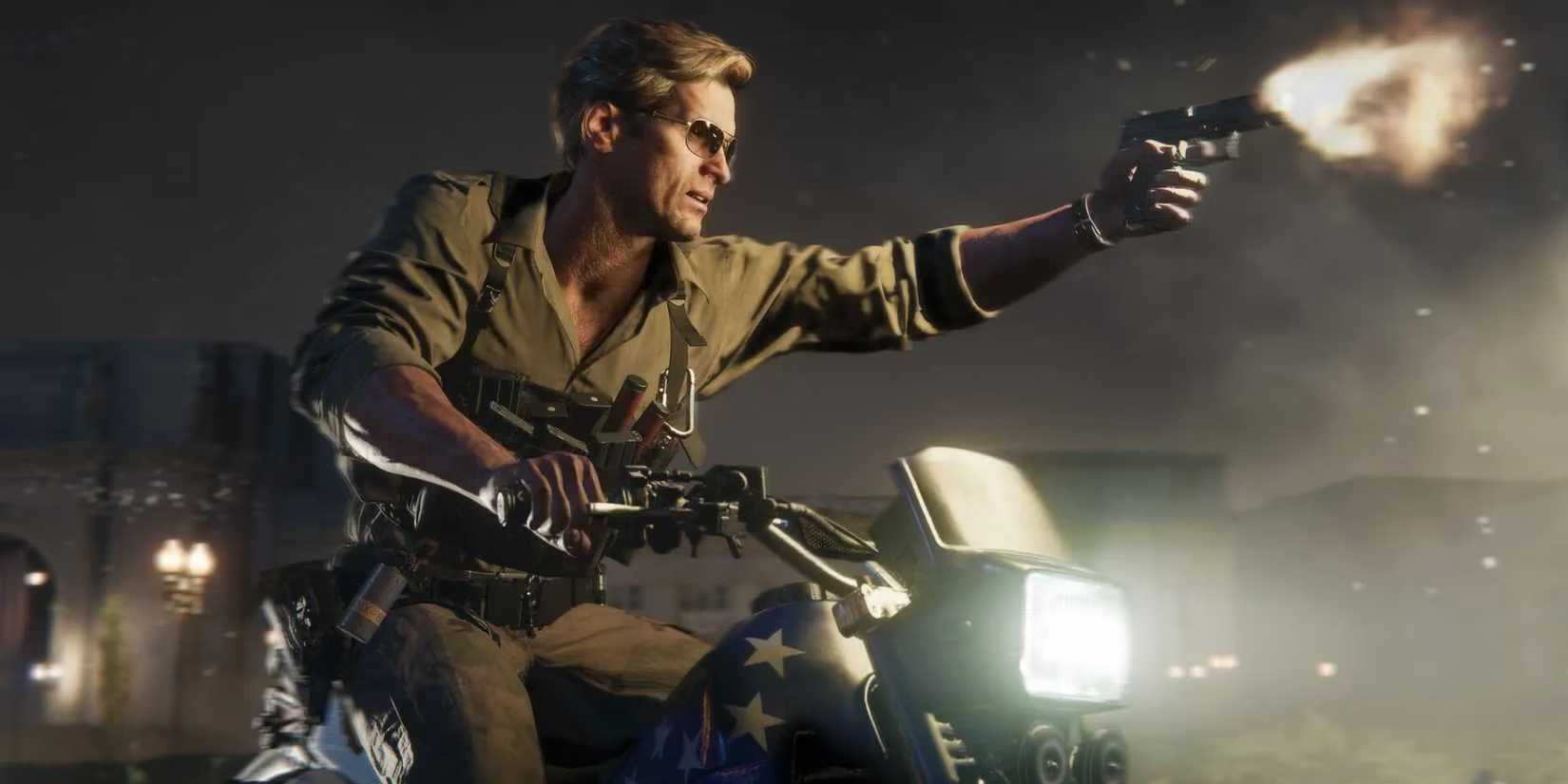
The entire Call of Duty franchise deserves a collective spot here because by 2026, the cycle has become a parody of itself. For nearly 20 years, it has been the best-selling machine nobody is allowed to criticize for lack of innovation. It is a juggernaut that charges $70 for a map pack masked as a new game, stuffed to the brim with celebrity skins, weapon blueprints, and microtransactions so aggressive they should come with a financial advisor. The gameplay loop, while mechanically tight, is a hamster wheel of spawn-die-repeat, and yet it is purchased religiously, a Pavlovian response to the yearly marketing hype. It doesn't matter if it's Black Ops 8 or Modern Warfare 4; the game is a vector for a store, not a piece of creative art. It is the most profitable and overrated annual product in the history of the medium.
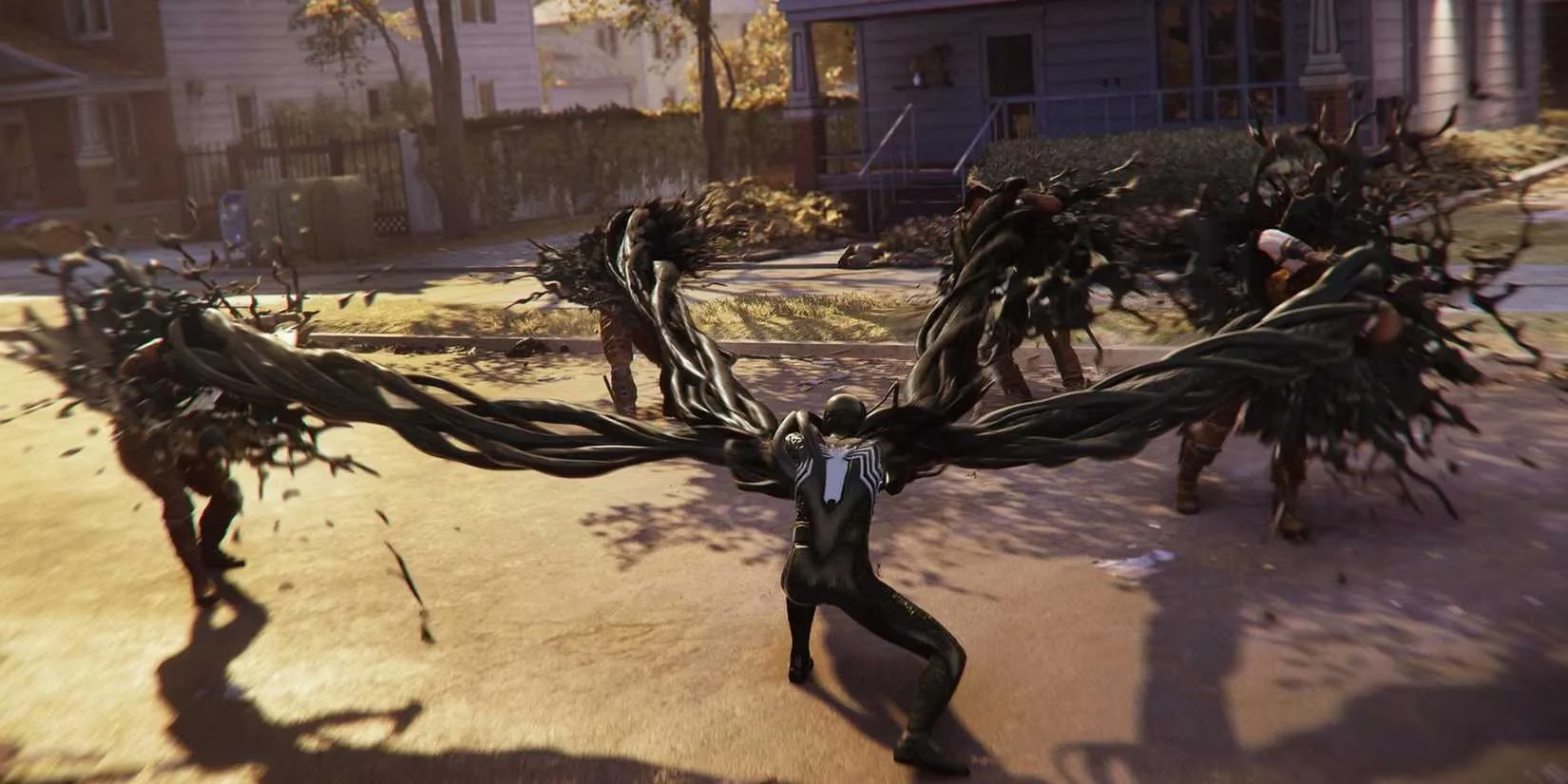
Swinging into the recent past, Marvel's Spider-Man 2 landed in 2023 with GOTY ambitions and left with a whimper. It felt like a massive expansion rather than a true evolution. Insomniac, for reasons no sane person can understand, doubled down on the Mary Jane stealth missions, the very sections everyone loathed in the original. It was as if they were actively trolling their fanbase. The combat system, while smooth, was a straight-up copy-paste from a five-year-old game, and in a baffling downgrade, they stripped away the unique suit powers that made collecting cosmetics exciting in the first place. Even Venom, the big draw, felt rushed—a symbiote so pressed for screen time that his arc stumbled into a finale just as it got interesting. It didn't hold a candle to the emotional gut punches of the 2018 game, proving that the hype train doesn't care about innovation; it only needs a familiar mask.
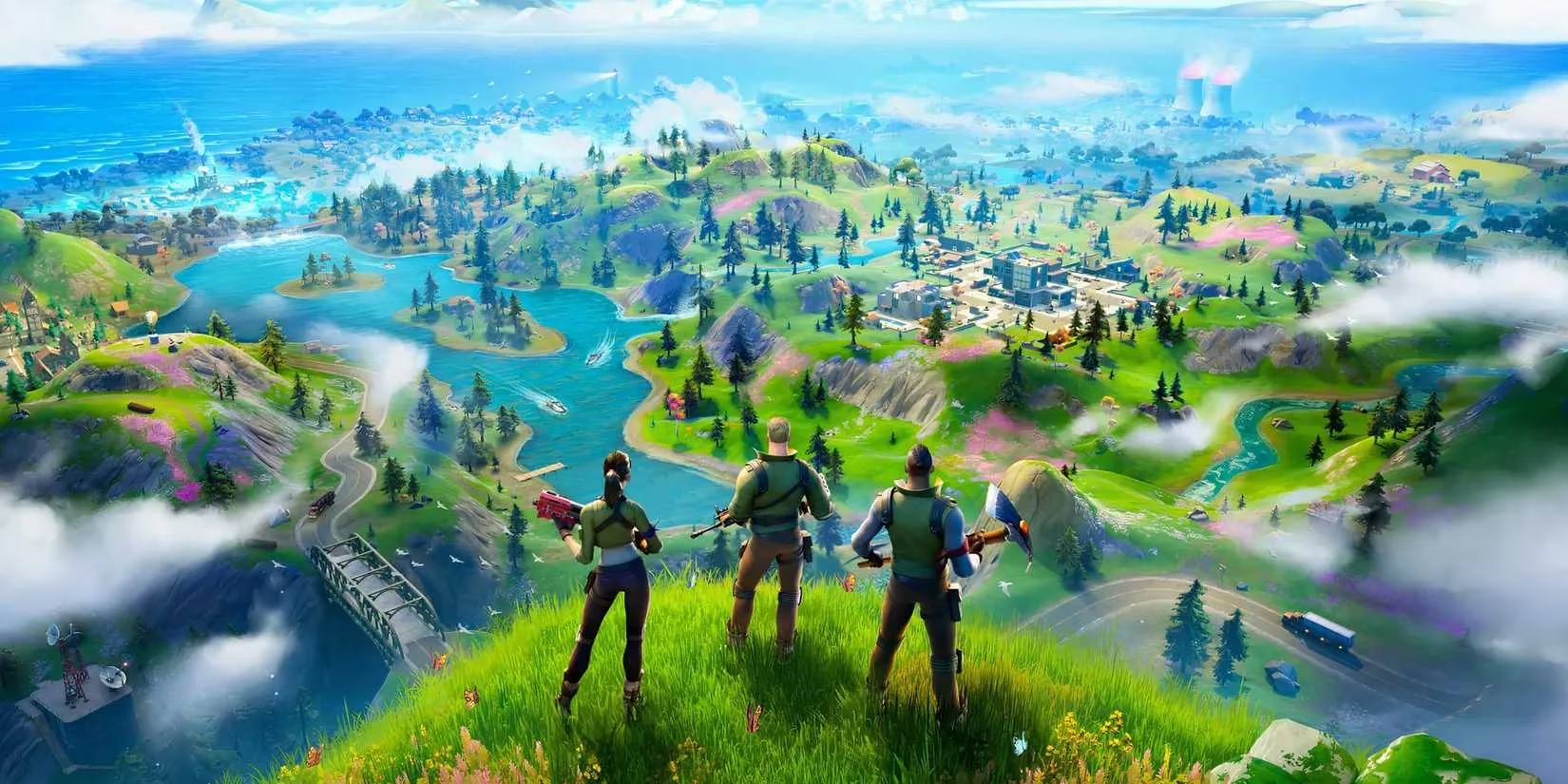
Finally, standing atop the Mount Rushmore of overrated software is Fortnite. By 2026, it has become the omnipresent metaverse, the literal Facebook of gaming. And what is the game? A third-person shooter with horrendously inaccurate, bloom-based gunplay built around a construction system that alienates 90% of new players. It is a storefront disguised as a game, a digital mall where kids spend thousands on V-Bucks to watch streamers play. Epic didn’t just sell a game; they sold a disgusting live-service template that poisoned an entire generation of titles, pushing publishers to abandon single-player dreams for "persistent world" nightmares. We have seen graphic styles homogenized, narratives destroyed, and predatory season passes normalized, all tracing back to this one cultural juggernaut. It is not a bad game per se, but the "Greatest of All Time" treatment it receives for being a polished, sanitized, pop-culture billboard makes it, hands down, the most overrated game of all time.