
When Godzilla Roamed Fortnite: The Chapter 6 Boss and Skin That Shook the Island
Fortnite Chapter 6’s Hunters update brought a colossal Godzilla boss and playable skin, thrilling fans with epic kaiju action.
Back in late 2024, the Fortnite island witnessed one of its most colossal visitors ever. The start of Chapter 6 brought a traditional Japanese theme under the name “Hunters,” but the real headline was a towering, radioactive reptile that had been lurking in the key art all along. Godzilla didn’t just make a cameo—he stomped right into the action as both a boss encounter and a playable skin, leaving players both terrified and delighted. Even now, in 2026, the echoes of that season’s titanic clash still linger in the memories of loopers everywhere.
The rumors had been swirling for months, fueled by blurry leaks and cryptic teases. Then came the official reveal: a key art image showing a sprawling Japanese-inspired landscape, cherry blossoms drifting across towering pagodas, and there, half-hidden in the mist, the unmistakable silhouette of Godzilla. The image said it all—this wasn’t just another crossover. It was a full-blown homage to kaiju cinema, and the developers at Epic Games were clearly having a blast with it.
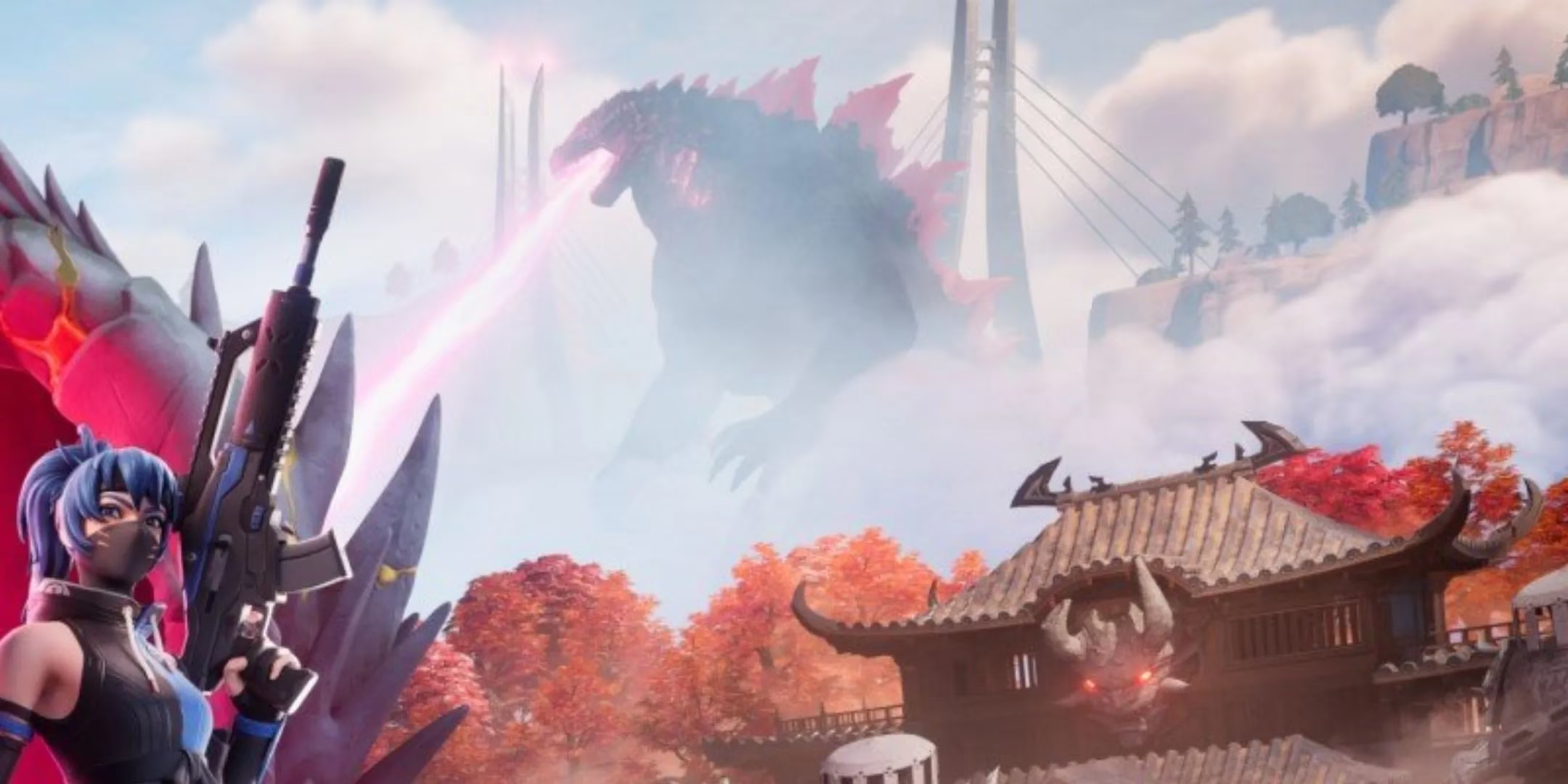
When the Chapter 6 servers went live, players discovered that Godzilla had set up his domain in a special zone on the map, a volcanic coastal area reminiscent of Monster Island. As a boss, he was a walking catastrophe. The colossal creature would lumber across the terrain, letting out a roar that could be heard from halfway across the island. His attacks included a devastating atomic breath that carved trenches into the landscape, a sweeping tail strike that sent squads flying, and a ground pound that created shockwaves capable of shaking structures apart. Engaging him was a team effort, often requiring a dozen or more players to bring down his massive health bar. The loot he dropped was legendary—including a mythic ability called “King’s Wrath” that granted a temporary, weaker version of his atomic breath. Talk about a power trip.
But here’s the twist that nobody saw coming. Not content with just being a boss, Godzilla was also included as a Battle Pass skin, and that’s where things got wonderfully weird. The developers didn’t simply scale him down to player size with the same proportions; instead, they gave the skin a charmingly clunky suit-actor look, deliberately reminiscent of the classic Showa-era movies. The skin’s movements had a slight rubbery stiffness, and its texture even showed subtle seams, as if it were a person inside a costume. When the skin emoted, it would occasionally release a tiny puff of cardboard-smoke breath—an adorable nod to the old special effects.
Many players initially scratched their heads. A Godzilla skin that looked like a guy in a suit? But once they saw it in action, the community absolutely fell in love. “Wait, he looks like someone’s dad at a Halloween party, and I’m here for it,” one streamer quipped, and that sentiment captured the mood perfectly. Combining the boss-fight intensity with the self-aware silliness of the skin turned the season into a nonstop celebration of all things kaiju.
The contrast between the two versions of Godzilla became one of the chapter’s defining features. On one side of the island, you’d have a skyscraper-sized beast torching entire named locations. On the other side, you’d see a squad of four tiny Godzillas—all in the suit skin—hopping out of a battle bus and doing the floss dance. Double Godzilla, as the insider ShiinaBR had teased, was never a bad thing. In fact, it was a glorious, meme-fueled masterpiece.
The boss encounters weren’t just scripted events, either. Godzilla’s patrol path was dynamic; sometimes he’d unexpectedly wander into the final circle, turning a tense endgame into complete chaos. I remember one afternoon, a friend of mine—let’s call him Dave—was 90-thrilled about his new sniper perch, only to have a giant scaly foot come down and squelch his whole setup. “Of course he steps right on me,” Dave groaned. Those moments became legend.
What made the Chapter 6 season even more remarkable was how it blended Japanese mythology with pop culture. The island’s new POIs included a bamboo forest, a misty village, and a futuristic neon city straight out of a cyberpunk anime. Godzilla fit right in as the ultimate yokai—an ancient force of nature that demanded both respect and teamwork. The narrative, conveyed through quests and environmental storytelling, suggested that the island’s Zero Point had pulled the kaiju through a rift, and now it was up to the loopers to either drive him back or... become him.
Beyond the sheer spectacle, the Godzilla season demonstrated Epic’s willingness to experiment with scale and tone. Previous seasons had given us giant bosses like the Devourer or the Mecha Team Leader, but none had doubled as a playable skin that so openly winked at its own absurdity. It was a perfect match for Fortnite’s identity: part serious crossover vehicle, part sandbox of surreal fun.
Looking back from 2026, that season is often cited as a high point for collaboration imagination. Subsequent chapters have brought their own share of icons—from anime legends to Hollywood monsters—but the double-dose of Godzilla remains a benchmark. The boss fight still appears in compilations of Fortnite’s most epic moments, and the suit skin is a beloved throwback sight in the item shop whenever it rotates back. For those who were there, the memory of seeing an enormous tail sweep across the horizon while a miniaturized king of monsters griddied in the background is something that just can’t be topped.
So, did you miss out on Chapter 6? No worries—the island’s history is always alive for those who dig deep. And if you ever find yourself facing a rampaging giant or sporting a costume that looks like it walked off a 1970s movie set, you’ll know exactly who started it all. Long live the king.